
Early Diplomatic Missions and the Consolidation in Mayfair
The following table details the primary locations of the U. S. diplomatic mission prior to the 1960 consolidation, illustrating the transient nature of the early presence:
| Period | Location | Status | Notes |
|---|---|---|---|
| 1785, 1788 | 9 Grosvenor Square | Rented Residence | Home of John Adams; diplomatic foothold. |
| 1790s, 1850s | Various (Great Cumberland Place, Piccadilly) | Leased Offices | Frequent relocations due to lease expirations and rent hikes. |
| 1863, 1866 | 98 Portland Place | Leased Legation | Civil War era operations; center of Union intelligence efforts. |
| 1883, 1893 | 123 Victoria Street | Leased Legation | Served as the mission until the upgrade to Embassy status. |
| 1912, 1938 | 4 Grosvenor Gardens | Leased Chancery | sustained 20th-century office; distinct from the Ambassador's residence. |
| 1938, 1960 | 1 Grosvenor Square | Leased Chancery | The move back to the Square; consolidated operations under Joseph Kennedy. |
The turning point for consolidation arrived in 1938 under Ambassador Joseph P. Kennedy. Recognizing the of scattered offices, Kennedy orchestrated a move back to the site of Adams' original landing: Grosvenor Square. The mission took over 1 Grosvenor Square, a building that would later house the Canadian High Commission. This move marked the beginning of the square's transformation into "Little America." The timing was serious. As World War II engulfed Europe, the square ceased to be a residential address and became the nerve center of the Allied war effort. By 1944, General Dwight D. Eisenhower had established his headquarters at 20 Grosvenor Square. The manicured gardens were paved over to accommodate Nissen huts, and the surrounding townhouses were requisitioned for military administration. The American presence became so dominant that London taxi drivers jokingly referred to the location as "Eisenhower Platz." Following the war, the United States sought to formalize this dominance with a purpose-built chancery. The Department of State commissioned a competition in 1955, a rare move for federal building projects. The winner was Eero Saarinen, a Finnish-American architect known for his modernist audacity. Saarinen's design for 24 Grosvenor Square was a radical departure from the Georgian brickwork that defined Mayfair. He proposed a massive, concrete structure featuring a diagrid façade, a structural lattice that served both as a load-bearing frame and a blast-deflection method. The construction of the Saarinen building, completed in 1960, was with diplomatic friction regarding land ownership. The United States government maintains a policy of owning the land beneath its embassies. yet, the Grosvenor Estate, owned by the Duke of Westminster, refused to sell the freehold. In a legendary exchange, the Duke reportedly offered to sell the land only if the United States returned his family's confiscated estates in Florida, specifically, the city of Miami. The U. S. declined the trade. Instead, the parties agreed to a 999-year lease, a technicality that allowed the embassy to remain on British soil while maintaining a semblance of permanence. The Saarinen chancery was crowned by a 35-foot aluminum eagle designed by Theodore Roszak. This sculpture became the defining symbol of the American presence in London, visible from blocks away. For decades, the building stood as a testament to mid-century American confidence: open, imposing, and unapologetically modern. Yet, the design that projected openness in 1960 became a liability by the turn of the millennium. The diagrid structure, while, could not easily accommodate the hardening required after the 1998 embassy bombings in East Africa and the attacks of September 11, 2001. Security forced the installation of ugly blast walls, bollards, and checkpoints that choked the surrounding streets and alienated the local residents. The "Little America" that had once been a symbol of liberation became a under siege. By 2008, the State Department concluded that the Mayfair location was untenable. The inability to secure the perimeter without strangling the neighborhood led to the decision to sell the lease and move to a new site in Nine Elms. The sale of the Grosvenor Square lease to Qatari Diar in 2009 marked the beginning of the end for the Mayfair era, although the embassy staff would not vacate the premises until January 2018. The building that had housed the secrets of the Cold War and the frantic diplomacy of the post-9/11 world was stripped of its classified hardware and diplomatic immunity. By 2026, the transformation of the site was absolute. The Saarinen building, once the target of anti-war protests and the seat of superpower projection, reopened as The Chancery Rosewood, a luxury hotel. The conversion, led by architect David Chipperfield, preserved the Grade II listed diagrid façade and the Roszak eagle, repurposing the symbols of state power into assets of high-end hospitality. The interior, once a warren of intelligence bureaus and visa processing centers, was gutted to create 144 suites and a ballroom. The irony of this evolution is clear. The site where John Adams struggled to pay rent and where Eisenhower planned the liberation of Europe is a commercial playground for the global elite. The 999-year lease remains, the tenant has changed. The United States government retreated south of the Thames, leaving its Mayfair legacy to be absorbed by the capital's voracious property market. The physical consolidation that began with Joseph Kennedy in 1938 and culminated in Saarinen's concrete palace dissolved, leaving behind only the architectural shell and the ghosts of diplomats who once walked the square. "Little America" exists only in history books and the branding of a hotel bar.
Design and Construction of the Saarinen Chancery (1955, 1960)

The architectural consolidation of the American diplomatic presence in London began in earnest during the mid-1950s, driven by a State Department directive to project cultural modernity through the Foreign Buildings Operations (FBO). In 1955, the United States launched a limited design competition for a new chancery in Grosvenor Square, a location already synonymous with American influence during World War II. Eight prominent architects submitted proposals, yet the commission went to Eero Saarinen, a Finnish-American modernist known for his structural audacity. Saarinen's winning concept proposed a radical departure from the Georgian townhouses that defined Mayfair, envisioning instead a massive, U-shaped disguised by a rhythmic façade.
The acquisition of the land itself exposed a rare limit to American diplomatic use. The site on the west side of Grosvenor Square belonged to the Grosvenor Estate, controlled by the Duke of Westminster. When the U. S. government attempted to purchase the freehold, the Duke's trustees refused. Legend that the Duke jokingly offered to sell the land only if the United States returned his family's ancestral estates in Florida, confiscated following the Revolutionary War. The Americans could not meet this condition. Consequently, the embassy rose on land the United States did not own, secured instead under a 999-year lease granted in 1954. The rent was set at a single peppercorn per year, a legal fiction that maintained the Grosvenor family's title to the soil beneath the American flag.
Construction began in 1957, presenting immediate engineering challenges. Saarinen collaborated with British firm Yorke, Rosenberg & Mardall to execute a design that relied on a complex diagrid system. This structural lattice, composed of interlocking concrete beams, allowed the building to carry its weight without a dense forest of internal columns. The diagrid served a dual purpose: it provided structural integrity and created a distinct visual identity. To mitigate the clash with Mayfair's brick-and-mortar tradition, Saarinen clad the pre-cast concrete in Portland stone, the same limestone used in Buckingham Palace and St Paul's Cathedral. The façade featured a staggered window pattern, described by contemporary critics as a "jazz rhythm", intended to break the monotony of the massive elevation.
The most contentious element of the design arrived in the form of a 35-foot gilded eagle. Sculptor Theodore Roszak won the commission to create the national emblem, which was to perch atop the chancery's roof. Roszak fabricated the bird from aluminum, anodized to a gold finish, with a wingspan that stretched over 11 meters. The sheer of the sculpture provoked immediate backlash from the British public and Parliament. Critics labeled it a "monstrosity" and a "gangster bird," arguing that its size and aggressive posture crushed the genteel aesthetics of the square. The debate reached the House of Commons, where members questioned whether the eagle violated local planning regulations. Saarinen defended the inclusion, asserting that the eagle was a necessary symbol of American sovereignty, placed high enough to be visible not, he claimed, to intimidate.
By the time the building opened on September 24, 1960, it stood as the largest American embassy in Western Europe. The interior reflected a period of diplomatic openness that would soon. The ground floor housed a public library and a theater, accessible to Londoners without the gauntlet of armed guards and blast walls that would define the post-2001 era. The lobby featured a gold-leafed stream and furniture designed by Charles and Ray Eames, projecting an image of mid-century optimism. Yet, the building's layout contained inherent flaws. The open-plan design and the extensive use of glass, while aesthetically aligned with democratic transparency, offered little protection against the evolving threats of the late 20th century.
The financial footprint of the project was significant for the era. While the exact total construction cost in 1960 dollars remains a subject of varying archival accounts, the Roszak eagle alone cost £4, 000 (approximately £90, 000 in 2024 value). The use of high-grade materials like Portland stone and the custom fabrication of the diagrid elements drove the budget well beyond standard office construction. The State Department justified the expense as a necessary investment in Cold War cultural diplomacy, using architecture to demonstrate American technological superiority and artistic freedom in the face of Soviet utilitarianism.
Saarinen did not live to see the building's long-term legacy; he died of a brain tumor in 1961, less than a year after the opening. His creation received a mixed reception from architectural critics. Nikolaus Pevsner, the preeminent architectural historian of Britain, described the chancery as "impressive decidedly embarrassing," criticizing the diagrid as a decorative affectation rather than a structural need. Even with the criticism, the building achieved Grade II listed status in 2009, a designation that legally protected its exterior, including the controversial eagle, from demolition, complicating the State Department's eventual exit decades later.
The 1960 chancery represented the apex of "Little America" in London, a moment when the United States felt secure enough to a modernist palace in the center of an aristocratic British neighborhood. The diagrid façade and the golden eagle functioned as permanent assertions of power, cemented by a lease that would outlast the geopolitical realities of the Cold War. This structure, designed for a world of open diplomacy, would soon find itself ill-equipped for the age of global terrorism, forcing a slow, ugly transformation from a glass-fronted library into a fortified bunker.
Security Hardening and Public Access Restrictions (1983, 2008)
| Year | Catalyst Event | Specific Measure Implemented | Impact on Public Access |
|---|---|---|---|
| 1983 | Beirut Embassy Bombing | Installation of heavy planters; window film upgrades. | End of casual entry; bag searches introduced. |
| 1985 | Inman Report Release | Structural assessment of blast vulnerability. | Identification of the site as "high risk/non-compliant." |
| 1991 | Gulf War | Temporary concrete blocks (Jersey blocks). | Partial obstruction of sidewalks. |
| 1998 | East Africa Bombings | Permanent concrete bollards; increased police patrols. | Vehicle standoff distance enforced. |
| 2001 | September 11 Attacks | Closure of western road; armed checkpoints. | Total prohibition of unauthorized vehicles near façade. |
| 2006 | Resident Protests | "Beautification" of blocks ($15M project). | None; aesthetic changes only. |
Local resentment boiled over in 2006. The Grosvenor Square Safety Group, a coalition of wealthy residents, launched a public relations offensive against the embassy's presence. They purchased full-page advertisements in *The Washington Post* and *The Times*, accusing the U. S. government of a "moral failure" for imposing a siege mentality on a residential neighborhood. The friction peaked when Countess Anca Vidaeff, a resident living opposite the side entrance, staged a three-day hunger strike. She claimed the security apparatus made her home unrentable and unsellable, describing the view from her window as a "low-grade prison." The Diplomatic Security Service faced an impossible physics problem. Modern blast modeling showed that even with the road closed, a large truck bomb detonated at the checkpoint could collapse the Chancery's façade. The building's structural frame, designed in the 1950s, absence the redundancy to survive a catastrophic shockwave. To compensate, the U. S. government spent approximately $15 million in 2007 and 2008 on a "Perimeter Security Project." This initiative replaced the ugly concrete blocks with purpose-built fences and "anti-ram" landscaping. While this placated aesthetic complaints, it did nothing to solve the fundamental geometric flaw: the building was too close to the threat. By 2008, the situation had become untenable. The cost of retrofitting the Saarinen building to meet post-9/11 standards was estimated in the hundreds of millions, with no guarantee of success. The "stand-off" distance remained zero. Intelligence chatter continued to highlight the London embassy as a prime target for Al-Qaeda. Ambassador Robert Tuttle formally announced in October 2008 that the United States would abandon its historic home. The decision was not driven by a desire for a new office, by the cold calculus of blast radius analysis. The move to Nine Elms was, at its core, a retreat from the city center to a defensible perimeter, a tacit admission that in the 21st century, an American embassy could no longer exist safely within the heart of a major Western capital. The legacy of this period is visible in the urban scarring of Mayfair. For twenty-five years, the embassy functioned as an island of American sovereignty enforced by concrete and steel. The friction between the mission and its neighbors demonstrated the limits of "soft power" when hard security is the priority. The transition from the open door of 1960 to the armed camp of 2008 mirrored the trajectory of American foreign policy itself: increasingly, heavily armored, and viewed with a mixture of fear and resentment by the local population. The decision to leave Grosvenor Square was the final acknowledgment that the Inman Standard and the Georgian square were mutually exclusive concepts.
Site Selection in the Nine Elms Regeneration Area
The decision to abandon the concrete at Grosvenor Square was not a matter of preference of survival. By the early 21st century, the Eero Saarinen-designed chancery, once a symbol of mid-century openness, had become a security nightmare. Following the 1998 embassy bombings in Nairobi and Dar es Salaam, the State Department's Bureau of Overseas Buildings Operations (OBO) codified the Standard Embassy Design (SED), which mandated a minimum 100-foot setback from any public roadway. The Mayfair location, hemmed in by the bustling streets of central London and residential blocks, could never meet this requirement. The post-9/11 retrofit, a ring of blast walls and concrete planters, had turned the diplomatic mission into an eyesore that infuriated local residents and offered insufficient protection against a dedicated vehicle-borne explosive device. A move was inevitable.
The search for a new site led U. S. officials away from the aristocratic enclaves of the West End to the industrial underbelly of the South Bank. The selected location, Nine Elms, possessed a history sharply contrasting with the manicured gardens of Mayfair. In the 1700s, the area was a low-lying marshland named for a row of elm trees bordering a country lane. It remained largely pastoral until the industrial revolution transformed it into a smoky engine of the capital. In 1838, the London and Southampton Railway opened its terminus at Nine Elms, flooding the district with steam engines, carriage works, and transient labor. By the mid-19th century, the Southwark and Vauxhall Water Company and the London Gas Light Company had established massive facilities there, defining the skyline with gasometers and smokestacks rather than church spires. For nearly 150 years, Nine Elms served as a logistical intestine for London, processing coal, water, and fruit at the New Covent Garden Market, while remaining socially and physically severed from the seats of power across the Thames.
The acquisition of the five-acre site in Wandsworth was formalized in October 2008, during the waning months of the George W. Bush administration. The deal was structured not as a taxpayer-funded expenditure as a complex property swap, a financial method designed to make the $1 billion project revenue-neutral. The State Department leveraged the immense value of its freehold and leasehold assets in Mayfair to bankroll the construction in Nine Elms. The primary asset, the Saarinen chancery at 24 Grosvenor Square, was sold to Qatari Diar, the property investment arm of the Qatari sovereign wealth fund. While the official sale price was kept confidential, real estate analysts estimated the value of the 999-year lease at approximately £500 million. This transaction, combined with the earlier 2007 sale of the Navy Annex at 20 Grosvenor Square for £250 million, provided the capital necessary to purchase the Nine Elms land and fund the construction of the new compound.
The architectural competition, launched in 2009, sought to reconcile the contradictory demands of a and a welcoming diplomatic face. The shortlist included heavyweights such as Morphosis, Pei Cobb Freed & Partners, and Richard Meier & Partners. The winning design, submitted by the Philadelphia-based firm KieranTimberlake, proposed a "crystalline cube" that eschewed visible perimeter walls in favor of -integrated security. The most distinct feature was a semi-circular pond, a moat, on the north side, designed to halt heavy trucks without the visual aggression of steel bollards. The building itself was wrapped in a transparent polymer film known as ETFE (ethylene tetrafluoroethylene), intended to reduce solar heat gain and glare while serving as a metaphorical veil of transparency. Ground was broken in 2013, initiating a construction phase that would test the limits of blast-proof engineering.
The relocation was not without fierce political and public criticism. In 2018, then-President Donald Trump publicly derided the move, tweeting that the administration had sold the "best located and finest embassy in London for 'peanuts'" only to build a new one in an "off location." His assessment, while politically charged, ignored the fiscal reality that the sale of the Mayfair leases had fully covered the cost of the new facility, requiring no direct appropriation from Congress. The "peanuts" claim was factually incorrect; the sale to the Qataris represented one of the most lucrative real estate disposals in State Department history. also, the "off location" characterization failed to account for the massive regeneration project already underway. The embassy served as the anchor tenant for the Nine Elms Opportunity Area, a multi-billion-pound redevelopment zone that would eventually attract the Apple UK headquarters to the refurbished Battersea Power Station and spur the extension of the Northern Line.
The security specifications of the Nine Elms compound reflect the paranoia of the modern age. The structure is set back the required 100 feet from the street, sitting atop a podium that conceals serious mechanical systems from attack. The glazing is inches thick, capable of withstanding high-velocity ballistics and blast overpressure. Internally, the building is compartmentalized to prevent the spread of chemical or biological agents. Even with these fortifications, the architects attempted to soften the bunker mentality. The "moat" is framed by a linear park, and the interior gardens, representing the diverse of the United States, from the Canyonlands to the Pacific Forest, spiral up the building's core. This integration of biophilic design with anti-terrorism force protection standards marked a significant departure from the concrete bunkers of the Cold War era.
By 2026, the context of the site had shifted dramatically. The embassy no longer stood as an cube in a wasteland of warehouses was surrounded by a canyon of luxury high-rises and commercial districts. The "off location" had become one of London's most expensive real estate markets, driven in part by the diplomatic presence. The Northern Line extension, with a dedicated station at Nine Elms, integrated the area into the central London transport network, erasing the psychological barrier of the Thames. The transition from the aristocratic heritage of Grosvenor Square to the post-industrial modernity of Nine Elms mirrored the shifting nature of American power itself: less reliant on old-world prestige, more focused on functional security, economic pragmatism, and the projection of influence through technological and architectural distinctiveness.
| Feature | Grosvenor Square (Mayfair) | Nine Elms (Wandsworth) |
|---|---|---|
| Historical Context | Aristocratic residential (18th Century) | Industrial/Marshland (19th Century) |
| Security Setback | 0 feet (Direct street frontage) | 100+ feet (Standard Embassy Design) |
| Perimeter Defense | Retrofit blast walls, concrete planters | Integrated, pond (moat), berms |
| Ownership Model | Leasehold (Grosvenor Estate) | Freehold (Purchased 2008) |
| Funding Source | Annual State Dept budget (Rent/Ops) | Self-funded via property disposals |
| Transport Link | Bond Street / Marble Arch | Nine Elms (Northern Line Extension) |
Architectural Competition and KieranTimberlake Selection (2010)
By 2008, the security liabilities of Grosvenor Square had become untenable. The State Department's Bureau of Overseas Buildings Operations (OBO) initiated a search not for a new building, for a new architectural paradigm. The directive was contradictory: create a capable of withstanding a massive vehicular bomb while projecting an image of transparency, welcome, and democratic openness. This competition marked a departure from the "Standard Embassy Design" templates that had produced bunker-like compounds in the post-9/11 era. The goal was "Design Excellence," a federal program intended to prove that security requirements need not result in aesthetic sterility.
The site selected for this experiment was a 4. 8-acre plot in Nine Elms, Wandsworth. At the time of purchase, the area was an industrial backwater defined by the derelict Battersea Power Station and a wholesale vegetable market. The move from the aristocratic heart of Mayfair to a regeneration zone south of the Thames signaled a shift in American diplomatic posture: from an inherited seat of power to a self-made anchor of urban renewal. The land deal itself was a gamble, predicated on the assumption that the embassy's presence would catalyze billions in real estate development around it.
Thirty-seven architectural firms submitted qualifications. By early 2009, the OBO narrowed the field to four finalists: Richard Meier & Partners, Morphosis Architects, Pei Cobb Freed & Partners, and KieranTimberlake. The shortlist represented a clash of philosophies. Richard Meier offered his signature white Neo-Corbusian modernism. Thom Mayne of Morphosis proposed a complex, aggressive structure that jurors found "touched by genius." Pei Cobb Freed presented a more traditional, monumental form. KieranTimberlake, a Philadelphia-based firm known for environmental research, pitched a concept that integrated security directly into the site's topography.
The jury included heavyweights such as Lord Richard Rogers and Lord Peter Palumbo. Their deliberations were contentious. Reports surfaced that the British jurors, Rogers and Palumbo, favored the Morphosis design for its architectural daring. They reportedly viewed the KieranTimberlake proposal as too safe, even boring. Yet, the State Department officials prioritized a design that balanced the visual statement with the strict, non-negotiable security setbacks and blast mitigation requirements. On February 23, 2010, the OBO announced KieranTimberlake as the winner.
KieranTimberlake's design centered on a crystalline cube, a 65-meter-tall glass monolith clad in a transparent polymer scrim. This material, Ethylene Tetrafluoroethylene (ETFE), was designed to reduce solar heat gain and glare while preventing bird strikes. The architects argued that the scrim would give the building a shifting, shimmering quality, changing appearance with the weather. Unlike the concrete walls of the Baghdad embassy, this structure used high-performance glazing to provide the necessary blast resistance, attempting to dematerialize the armor.
The most scrutinized element of the design was the "water feature." To meet the requirement for a 100-foot setback from the street, the architects placed the building on a plinth surrounded by a semi-circular pond. While official press materials described it as a stormwater management system and a civic amenity, it functioned primarily as a moat. This trench was engineered to stop a truck bomb from reaching the building's perimeter. The design team worked to mask other defensive , bollards, walls, and fences, within the grading of the earth and the planting of native trees. They termed this method "diplomacy of the environment," suggesting that the park-like setting bridged the gap between the and the city.
Financial independence defined the project's execution. The State Department committed to funding the entire $1 billion budget through the sale of other U. S. government properties in London. This included the long-term lease on the Grosvenor Square chancery and the Navy Annex. This self-financing model insulated the project from Congressional budget battles placed immense pressure on the real estate market to deliver high returns on the sold assets. The sale of the Grosvenor Square lease to Qatari Diar for conversion into a luxury hotel became the linchpin of this funding strategy.
serious reaction to the selection was immediate and polarized. Architecture critics in the UK dubbed the design "The Borg Cube," referencing a villainous shared from Star Trek. They pointed to the moat and the setback as evidence that the U. S. was retreating from the city fabric, even with the glass facade. The Guardian noted that the building reflected the American political process: "nominally open to all, yet, in practice, tightly controlled." Conversely, technical journals praised the integration of sustainability, including the goal of carbon neutrality through photovoltaic arrays and ground source heat pumps.
The selection of KieranTimberlake in 2010 set the stage for a complex construction phase. The architects had to deliver a building that met LEED Platinum standards and the highest diplomatic security ratings simultaneously. The design locked the United States into a specific visual identity for the century: a cool, detached, high-tech object sitting behind a defensive perimeter of water and earth, distinct from the brick-and-mortar integration of its predecessors.
Project Funding via Real Estate Asset Liquidation

Table: Liquidation of US Diplomatic Assets in Mayfair (2009-2013)
| Asset | Buyer | Estimated Sale Price | Post-Sale Use (2026 Status) |
| 24 Grosvenor Square (Chancery) | Qatari Diar (Qatar) | £315m, £500m | The Chancery Rosewood Hotel |
| 20 Grosvenor Square (Navy Annex) | Finchatton / ADIA (Abu Dhabi) | ~£250m | Luxury Residences (Four Seasons) |
| Total Proceeds | -- | ~£565m, £750m | Funding for Nine Elms |
The math of the relocation required strict discipline. The budget for the Nine Elms embassy was fixed at roughly $1 billion. Any cost overruns would have triggered a need for appropriated funds, breaking the "no taxpayer money" pledge. The project, constructed by B. L. Harbert International, largely adhered to this constraint, although the final accounting involves complex internal fund transfers within the OBO's global ledger. By 2026, the transformation of the liquidated assets is complete. The former Chancery at 24 Grosvenor Square has reopened as The Chancery Rosewood, a luxury hotel where the room rates for a single night frequently exceed the monthly salary of the marine guards who once patrolled its lobby. The Grade II listing of the building preserved its exterior, including the massive gilded eagle surmounting the façade, a permanent, if sold, symbol of American power decorating a Qatari-owned commercial asset. The financial legacy of this liquidation is a shift in asset class. The United States traded a depreciating, security-compromised leasehold in a heritage district for a freehold, purpose-built in a regeneration zone. While the move severed the historic link to Mayfair established by John Adams, it secured the embassy's physical future without drawing on the federal treasury. The transaction privatized the value of US diplomatic history in London, converting 20th-century prestige into 21st-century concrete and ballistic glass.
Construction Timeline and Material Specifications (2013, 2017)
The physical realization of the new diplomatic compound in Nine Elms began in earnest during the latter half of 2013, marking a decisive shift from the cramped, retrofit-heavy legacy of Grosvenor Square to a purpose-built on the South Bank. Following the selection of Philadelphia-based architecture firm KieranTimberlake, the Department of State awarded the construction contract to B. L. Harbert International, a firm with extensive experience in securing diplomatic facilities. The site preparation required the remediation of a former industrial zone, a brownfield area previously occupied by the chaotic logistics of the New Covent Garden Market and various light industrial warehouses. On November 13, 2013, officials formally broke ground, though permanent site works, including the installation of test piles and the diaphragm wall, had already commenced in August of that year.
The structural philosophy of the embassy departed from the traditional walled compound. Instead of a perimeter of high fences, the design relied on a "crystalline cube" set atop a colonnade, integrating security directly into the and the building's skin. The primary structure rose as a concrete core, eventually supporting a steel framework that would house the chancery's 518, 000 square feet of interior space. By September 2015, the concrete floor slabs for the chancery were nearing completion, and the internal curtain wall installation had reached the upper levels, enclosing the spaces that would soon house the mission's diplomatic corps.
The defining visual and functional element of the construction was the high-performance facade, installed between 2015 and 2017. Unlike standard glass curtains, this envelope utilized a complex system designed to manage the specific solar conditions of London while mitigating blast impacts. The outer skin consisted of 399 single- sails made of Ethylene Tetrafluoroethylene (ETFE), a fluorine-based plastic known for its high corrosion resistance and strength over a wide temperature range. Manufactured and installed by Birdair, these translucent fins were tensioned against a custom aluminum framework weighing approximately 180 tons, anchored by 57 carbon steel headmounts. The ETFE sails were not decorative; they were engineered to minimize solar gain and glare, reducing the cooling load on the building while allowing natural light to penetrate deep into the floor plates. This "transparent" barrier also served a serious avian safety function, making the sheer glass walls visible to passing birds to prevent collisions.
Beneath the facade, the material specifications for the interior demanded both durability and symbolic resonance. Grants of Shoreditch, a specialist stone contractor, supplied and installed over 2, 500 square meters of Moleanos limestone flooring for the main entrance and 1, 000 square meters of internal cladding. The limestone, chosen for its consistency and hardness, became the canvas for a CNC-carved Great Seal of the United States, measuring 4. 5 meters in diameter, which dominates the entrance hall. The interior layout eschewed the traditional compartmentalization of government offices. Instead, it featured a spiraling series of six internal gardens, each planted to represent a distinct American eco-region, from the Pacific Forest to the Mid-Atlantic. These "sky gardens" required the installation of specialized irrigation and drainage systems within the building's superstructure, complicating the mechanical, electrical, and plumbing (MEP) coordination managed by Arup.
The external grounds, designed by OLIN Studio, functioned as the line of defense, disguising anti-ram blocks within the topography. The most discussed feature was the semi-circular water feature along the northern edge, frequently mischaracterized by the press as a "moat." While it provided a standoff distance required by Diplomatic Security Service standards, its engineering purpose was hydraulic. The pond served as a catchment basin for the site's stormwater management system, filtering runoff before it entered the municipal sewers or the Thames. This feature, combined with the absence of perimeter fencing, aimed to project openness while maintaining a hardened security posture. The surrounding terrain used berms and retaining walls, clad in the same limestone as the interior, to guide pedestrian flow and block vehicular vectors without the visual aggression of bollards.
Sustainability drove the mechanical specifications throughout the 2013, 2017 build period. The facility was designed to achieve LEED Platinum and BREEAM Outstanding certifications, a rare dual accolade for a high-security government building. To meet these metrics, the construction team installed a ground source heat pump system, drilling deep into the London clay to extract thermal energy. The roof and the ETFE fins incorporated photovoltaic arrays to generate renewable electricity on-site. Water neutrality was a central engineering goal; the site included a deep well aquifer and a wastewater treatment plant designed to recycle water for sanitary and irrigation use, theoretically allowing the embassy to operate off the local water grid for extended periods.
The financial of the project was immense, with a budget hovering around $1 billion, funded entirely by the proceeds from the sale of other U. S. government properties in London, specifically the lease on the Grosvenor Square chancery. This funding model insulated the project from direct congressional appropriation battles placed intense pressure on the project managers to stay within the fixed capital generated by the real estate offloading. By late 2017, as the final stone cladding was polished and the ETFE sails tensioned, the building stood complete, a clear, modern monolith ready to receive the diplomatic mission in January 2018.
| Component | Specification / Metric | Supplier / Contractor |
|---|---|---|
| Facade Material | Ethylene Tetrafluoroethylene (ETFE) single- sails | Birdair / Taiyo Group |
| Facade Support | 180 tons of aluminum framing; 57 carbon steel headmounts | Birdair |
| Interior Stone | Moleanos Limestone (2, 500m² flooring, 1, 000m² cladding) | Grants of Shoreditch |
| Structural Core | Reinforced Concrete & Steel Framework | BL Harbert International |
| Sustainability | Ground Source Heat Pumps, PV Arrays, Rainwater Harvesting | Arup (Engineering) |
| Security | Stormwater Pond ("Moat"), Berms, Retaining Walls | OLIN Studio |
The Glass Cube: Facade Technology and Energy Systems

| Metric | 1960 Chancery (Grosvenor Sq) | 2018 Chancery (Nine Elms) |
|---|---|---|
| Facade Material | Portland Stone / Concrete | Laminated Glass / ETFE Polymer |
| Glazing Type | Single/Double Pane (Standard) | 6-inch Multi-laminate Blast Resistant |
| Primary Heating | Gas/Electric Boilers | Ground Source Heat Pumps / CHP |
| On-site Power Gen | None (Grid Dependent) | 345, 000 kWh/year (Solar PV) |
| Water Management | Municipal Discharge | On-site Capture / Recycled Rainwater |
| Certifications | None | LEED Platinum / BREEAM Outstanding |
| Blast Standoff | Minimal (Street Edge) | 100 feet (30+ meters) |
The attainment of LEED Platinum and BREEAM Outstanding certifications was a mandatory target for the project, not an optional accolade. These certifications required the rigorous tracking of materials, from the recycled content in the steel to the sourcing of the timber used in the interior gardens. The "Glass Cube" consumes roughly half the electricity of a standard office building of comparable size, a metric that has held steady through the mid-2020s. Yet, the financial cost of this efficiency was high. The total project cost hovered near $1 billion, a figure that drew sharp criticism during the construction phase. Critics argued that the energy savings would take decades to recoup the initial investment in high-tech glazing and geothermal drilling. Proponents countered that the value lay not just in the utility bill, in the resilience of the mission; a self-powering embassy is harder to siege. By 2026, the maintenance of the facade has presented its own set of challenges. While the ETFE is durable, the tensioning cables and the metal cowls that support the solar shading require specialized inspection. Accessing the outer skin of a blast-proof building is not simple; the maintenance cradles must be deployed with precision to avoid damaging the delicate polymer sails. The "transparent" aesthetic also demands absolute cleanliness; any accumulation of algae or dirt on the inner glass , trapped behind the sails, would ruin the visual effect of the crystalline cube. Consequently, the facilities management budget for the Nine Elms embassy remains significantly higher than that of a conventional diplomatic post, a recurring line item that reflects the price of maintaining a high-performance machine in a wet, urban climate. The "Glass Cube" stands as a paradox of modern diplomatic architecture. It uses transparency to hide its armor and nature to power its defenses. The ETFE sails and the geothermal loops are not greenwashing; they are integral to the survival of the building in a hostile world. The structure asserts that the United States can be open and accessible, while simultaneously proving that it is prepared for the worst. This technological duality, the open hand and the closed fist, defines the physical presence of the US in London in the 21st century.
Perimeter Defense and Landscape Architecture
| Feature | Primary Function | Defensive Capability |
|---|---|---|
| North Edge Water Feature | Stormwater Management | Anti-ram vehicle barrier; enforces 100ft standoff. |
| Earth Berms ("Meadows") | Landscaping / Aesthetics | Blocks line-of-sight; deflects blast energy; conceals retaining walls. |
| Ha-Ha Walls | Boundary Definition | Concealed trench preventing vehicle ingress without visual fencing. |
| ETFE Facade Sails | Solar Shading | Shatter retention; obscures internal layout from external surveillance. |
| Entry Pavilions | Access Control | Separates screening process from the main chancery structure. |
The cost of this invisibility was high. The project budget exceeded $1 billion, a figure justified by the integration of these passive defenses. Unlike the concrete blocks of Grosvenor Square, which signaled fear, the Nine Elms defenses signal supreme confidence in engineering. The absence of a perimeter fence is the flex of the security state: the ability to stop a truck bomb with a flower bed and a pond. By 2026, the site has settled into its role not just as a diplomatic mission, as a disguised as a park, where the tension between the image of openness and the reality of exclusion is built into every cubic inch of concrete and water.
Operational Transfer and Political Controversy (2018)
| Feature | Grosvenor Square (1960-2018) | Nine Elms (2018-Present) |
|---|---|---|
| Land Ownership | Leasehold (Grosvenor Estate) | Freehold (US Government) |
| Architect | Eero Saarinen | KieranTimberlake |
| Security Setback | Minimal (Street Level) | 100 Feet (30 Meters) |
| Facade Material | Portland Stone & Concrete | Laminated Glass & ETFE |
| Cost to Taxpayer | Construction funded by appropriation | $0 (Funded by property sales) |
| Perimeter Defense | Concrete Jersey blocks | Linear Pond & Landscaped Berms |
Adaptive Reuse of the Grosvenor Square Property (2017, 2026)
| Feature | US Embassy Era (1960, 2017) | The Chancery Rosewood (2026) |
|---|---|---|
| Primary Function | Diplomatic Chancery / Intelligence | Ultra-Luxury Hospitality |
| Owner | United States Government | Qatari Diar (Qatar Sovereign Wealth) |
| Security Posture | Fortified (Bollards, Blast Walls, Marines) | Permeable (Public Entrances, Retail) |
| Interior Layout | Partitioned Offices, Secure Zones | 144 Suites, Open Atrium, Ballroom |
| Roof Feature | Roszak Eagle (Symbol of State) | Roszak Eagle (Heritage Ornament) |
| Ground Floor | Screening Checkpoints, Waiting Areas | Carbone Restaurant, Retail Boutiques |
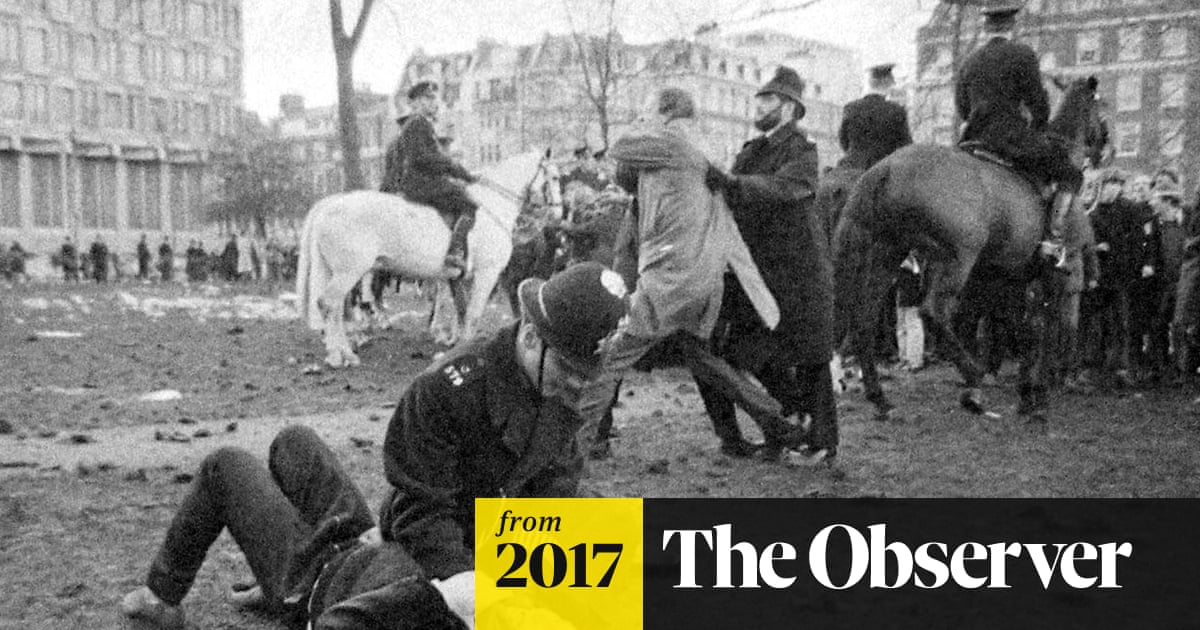
The financial of the project dwarfs the original construction costs. The United States spent approximately $5 million to build the embassy in the late 1950s. The renovation by Qatari Diar reportedly exceeded £1 billion in gross development value. This figure includes the acquisition cost and the extensive structural reinforcement required to turn an office building into a hotel. The project faced significant engineering blocks. The diagrid facade is load-bearing. This limited where the architects could cut new windows or doors. The solution involved rebuilding the floors behind the facade to align with modern hotel standards while leaving the exterior appearance largely untouched. Critics of the project point to the loss of public history. The embassy was the site of anti-Vietnam War demonstrations in 1968. It was where Londoners left flowers after the September 11 attacks. It was a place of political engagement. The hotel sanitizes this history. The "War Room" suites and "Diplomat" wings use the past as an aesthetic filter rather than a historical record. The public can access the restaurants, yet the building is more exclusive than when it required a visa appointment to enter. The security guards at the door no longer check for weapons. They check for reservations. The completion of The Chancery Rosewood in late 2025 closed the chapter on the US presence in Mayfair. The United States government operates from its crystalline cube in Nine Elms. That new facility sits behind a moat. It is physically separated from the city by water and distance. The Grosvenor Square property remains in the center of London. It stands as a monument to the durability of Saarinen's design and the fluidity of capital. The eagle remains on its perch. It watches over a square that has returned to the aristocratic quietude of the 18th century, financed by the gas revenues of the 21st. The adaptive reuse of 24 Grosvenor Square is not a renovation. It is a physical manifestation of the transfer of influence from the Atlantic alliance to the global luxury market.
Embassy Operations and Protest Management (2018, 2026)
The transition from the cramped, indefensible quarters of Grosvenor Square to the purpose-built in Nine Elms marked a definitive shift in American diplomatic posture. On January 16, 2018, the United States officially opened its new mission at 33 Nine Elms Lane. The structure, a crystalline cube designed by architects KieranTimberlake, came with a construction price tag of approximately $1 billion. This expenditure made it one of the most expensive diplomatic buildings on earth. The State Department financed the project entirely through the sale of its other London properties rather than taxpayer appropriation. The design philosophy attempted to balance transparency with extreme hardening. A semi-circular pond, frequently mislabeled as a moat, guards the northern method. This water feature functions as a kinetic barrier capable of stopping heavy vehicles. The building sits one hundred feet back from the street. This setback distance exceeds the standard blast requirements for diplomatic posts. The facade consists of laminated glass six inches thick. These panels can withstand massive concussive force while allowing natural light to penetrate the interior.
The operational reality of the new site faced immediate testing. President Donald Trump visited the United Kingdom in July 2018. His arrival ignited one of the largest mobilizations of public dissent in British history. Organizers estimated that nearly 250, 000 people marched through central London. The embassy issued alerts advising American citizens to keep a low profile. The isolation of the Nine Elms site proved advantageous for security forces. Police could contain demonstrations south of the Thames more easily than in the dense streets of Mayfair. The "Baby Trump" balloon, a twenty-foot orange blimp, flew over Parliament Square the anger it symbolized washed up against the fortifications of the new embassy. The diplomatic mission had become a lightning rod. The architecture successfully separated the staff from the fury outside. This physical detachment signaled a new era where the embassy functioned less as a public reception hall and more as a secure command post.
Civil unrest surged again in June 2020 following the death of George Floyd in Minneapolis. The global Black Lives Matter movement found a focal point at the Nine Elms complex. On June 7, thousands of protesters converged on the site. They chanted slogans and knelt on the pavement outside the perimeter. The Metropolitan Police deployed mounted units to manage the crowds. Tensions escalated into scuffles. Officers made over two dozen arrests across London during that weekend. The embassy released statements supporting the right to peaceful protest. Yet the physical barrier of the pond and the raised gardens created a clear visual separation between the representatives of the American state and the populace demanding justice. The design intended to project openness in practice it enforced a rigid boundary. The protesters could shout at the glass cube they could not get near it.
The geopolitical conflicts of the 2020s brought even larger crowds to the embassy gates. The Israel-Gaza war that began in October 2023 triggered a sustained wave of demonstrations. The Palestine Solidarity Campaign organized marches that frequently targeted the US mission due to American military support for Israel. On November 11, 2023, a massive march moved through London. Police estimated the crowd at 300, 000 while organizers claimed 800, 000. of this human directed its ire at the Nine Elms facility. The Metropolitan Police drafted over 1, 000 officers to maintain order. These protests continued well into 2024 and 2025. The embassy became the primary stage for anti-war sentiment in the United Kingdom. The recurring nature of these events forced the diplomatic security teams to maintain a permanent footing of high alert. The cost of policing these demonstrations fell upon the British taxpayer. This added a of friction to the host-nation relationship.
Environmental activists also identified the embassy as a high-value target for symbolic disruption. On November 6, 2024, the morning after the US presidential election, two activists from the group Just Stop Oil method the compound. They sprayed orange paint across the perimeter wall. The vandals stated their action was a protest against the incoming administration and its stance on fossil fuels. Police arrested two men, aged 25 and 72, on suspicion of criminal damage. The incident exposed a vulnerability in the outer defenses. While the building itself is bomb-proof, the long perimeter walls remain susceptible to defacement. The visual of the orange paint on the embassy fortifications circulated globally on social media. It served as a reminder that even the most secure cannot fully immunize itself against political expression.
A quieter persistent conflict has simmered between the embassy and Transport for London (TfL). The dispute centers on the Congestion Charge. This daily fee applies to vehicles driving in central London. The United States government refuses to pay this charge. American officials classify it as a tax rather than a service fee. They that diplomatic immunity exempts them from local taxation. By May 2024, the unpaid debt attributed to the US embassy had surpassed £15 million. This figure made the American mission the largest debtor among all foreign diplomatic bodies in London. TfL has repeatedly threatened to take the matter to the International Court of Justice. The US State Department has remained unmoved. This standoff continues to irritate local officials. It reinforces a perception of American exceptionalism where local laws apply to citizens not to the envoys of the superpower.
By early 2026, the embassy at Nine Elms has settled into its role as a hardened outpost. The surrounding area has transformed from an industrial wasteland into a district of luxury high-rises. The embassy no longer stands alone in a field of construction cranes. It is the anchor of a gentrified quarter. Yet the security remain severe. Visitors must navigate multiple screening. The staff operates behind blast walls and anti-ram blocks. The mission has successfully insulated itself from physical attack. this security has come at the cost of accessibility. The days of the open door at Grosvenor Square are gone. The United States maintains its presence in London through a structure that prioritizes survival over engagement. The glass cube stands as a monument to the necessities of modern diplomacy in a volatile world.
| Date | Event / Cause | Estimated Crowd | Key Incident |
|---|---|---|---|
| July 13, 2018 | Trump UK Visit | ~250, 000 (London-wide) | "Trump Baby" balloon flown; embassy lockdown. |
| June 7, 2020 | Black Lives Matter | 10, 000+ | Clashes with police; "Moat" line held. |
| Nov 11, 2023 | Gaza Ceasefire March | 300, 000, 800, 000 | Massive convergence; heavy police draft. |
| Nov 6, 2024 | Just Stop Oil / Election | Small cell (2 actors) | Perimeter wall sprayed with orange paint. |
| Nov 2, 2024 | Gaza / Balfour Protest | Thousands | March from Whitehall to Nine Elms. |