Founding in Republican China and 1949 Exodus to Hong Kong
The Foreign Correspondents' Club (FCC) of Hong Kong traces its lineage not to the British colony where it resides, to the mist-shrouded, bomb-battered wartime capital of Chongqing (Chungking). Its establishment in 1943 was a direct response to the information control method of the Kuomintang (KMT). Foreign journalists, stifled by the censorship of Generalissimo Chiang Kai-shek's regime and the physical dangers of the Japanese invasion, required a sanctuary. They found it in a twenty-four-room house known as the Press Hostel. Here, amidst air raids and the humid haze of the Sichuan basin, the club's identity was forged: a mixture of professional solidarity, cynical detachment, and necessary debauchery.
This founding moment was the culmination of a century of foreign journalistic presence in China, dating back to the Canton System of the 1700s and the Treaty Ports of the 1800s. For generations, "Old China Hands" had operated with relative impunity in the concessions of Shanghai and Tientsin. The Second Sino-Japanese War dismantled this privilege. By 1943, the correspondents were no longer colonial masters of their domain observers caught between a crumbling Nationalist government and an ascending Communist force. The club in Chongqing served as a shared bargaining unit against KMT censors, a place where reporters like Richard "Cardinal" Hughes could trade rumors that the official press briefings omitted.
Following the Japanese surrender in 1945, the club migrated with the Nationalist government, to Nanjing (Nanking) and then to Shanghai. It was in Shanghai that the FCC occupied its most mythic pre-Hong Kong location: the ninth floor of the Broadway Mansions. This Art Deco monolith, standing at the confluence of the Suzhou Creek and the Huangpu River, offered a panoramic view of the Bund, a vantage point from which members would eventually watch the death throes of Republican China. The bar at the Broadway Mansions became legendary not for its luxury, for its atmosphere of doomed hedonism. As the Chinese Civil War intensified, hyperinflation rendered the local currency worthless; correspondents paid for drinks with sacks of banknotes, and the conversation shifted from post-war reconstruction to the inevitable Communist victory.
The spring of 1949 marked the terminal phase of the FCC's mainland existence. The People's Liberation Army (PLA) encircled Shanghai. The "Battle of Broadway Mansions" in May 1949 saw the building itself become a literal battleground, with KMT defenders using the structure as a against the advancing communist troops. Foreign journalists, once protected by diplomatic extraterritoriality, found themselves in the crossfire. The fall of Shanghai necessitated an immediate exodus. The Communist Party of China (CCP), viewing foreign reporters as spies and imperialist agitators, made their continued presence untenable. Expulsions and visa denials followed swiftly, the network of foreign bureaus that had existed for decades.
The retreat was chaotic. Correspondents fled south, mirroring the retreat of the KMT, yet their destination was the British Crown Colony of Hong Kong. On June 23, 1949, the Foreign Correspondents' Club was formally reconstituted in Hong Kong. This was not a relocation; it was a fundamental transformation of the club's purpose. In mainland China, the members were participants in the daily life of the nation. In Hong Kong, they became "China Watchers", outsiders peering over the border, parsing propaganda and refugee accounts to understand a country they could no longer enter.
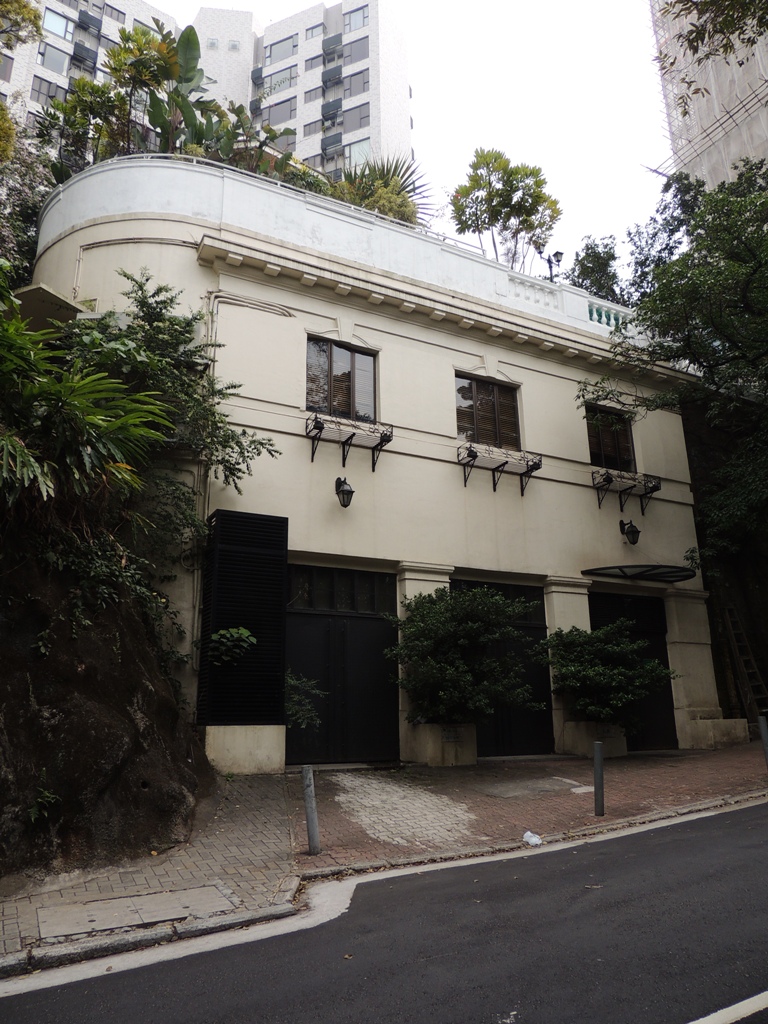
The club's home in Hong Kong was a white granite mansion at 15 Kotewall Road, in the Mid-Levels. Known as "Stone House," this location provided a clear contrast to the urban density of the Broadway Mansions. It was a colonial residence, removed from the bustle of the harbor, suggesting a temporary respite rather than a permanent institution. The founding membership in Hong Kong was small, consisting of just eleven full members initially, most of whom were refugees from the Shanghai chapter. They carried with them the institutional memory of the mainland club, including the debts and the drinking culture, yet they faced a new reality: they were operating in a colony whose future was entirely dependent on the tolerance of the new regime in Beijing.
The transition to Hong Kong also altered the demographic of the foreign press corps. The "Old China Hands" who spoke the language and had deep networks in the interior were gradually replaced or repurposed as analysts of Cold War geopolitics. The FCC at Kotewall Road became the primary listening post for the Western world's intelligence on Red China. It was here that the archetype of the Hong Kong correspondent was solidified: a figure clad in a linen suit, trading intelligence with diplomats and spies, waiting for the convulsion from the mainland. The club provided the infrastructure for this existence, offering cheap food, reliable alcohol, and a network of peers who understood the specific anxieties of covering a closed society.
The physical environment of 15 Kotewall Road was less a club and more a communal house for displaced professionals. It had no air conditioning, and the humidity of the Hong Kong summer mirrored the oppressive heat of Chongqing. Yet, it served as a important anchor. The early presidents, such as Monty Parrott of Reuters, worked to establish the club's legitimacy with the British colonial administration, which viewed the influx of journalists with suspicion. The colonial government feared that the FCC would become a hub for political agitation that might provoke the Chinese Communists. Consequently, the club had to navigate a delicate route, asserting its commitment to press freedom while avoiding actions that would threaten its lease or the colony's precarious security.
By the end of 1949, the FCC had successfully transplanted its roots from the scorched earth of the Chinese Civil War to the rocky slopes of Hong Kong Island. The "exodus" was complete, the club remained defined by what it had left behind. The ghosts of Shanghai, the unpaid tabs, the abandoned bureaus, the friends lost to the revolution, haunted the rooms of Kotewall Road. This sense of exile permeated the club's culture, a camaraderie based on shared displacement. The FCC was no longer just a social venue; it was a monument to a lost era of access and a forward operating base for the information wars of the half-century.
FCC Relocation Timeline: 1943, 1951
Period
Location
City
Context
1943, 1945
Press Hostel
Chongqing
Founded during WWII to counter KMT censorship.
1945, 1946
Various
Nanjing
Followed the KMT government return to the capital.
1946, 1949
Broadway Mansions (9th Floor)
Shanghai
Civil War reporting; "Battle of Broadway Mansions."
May 1949
Evacuation
Shanghai to HK
CCP victory forces expulsion of foreign press.
June 1949
15 Kotewall Road
Hong Kong
Formal re-establishment in British territory.
1951
41A Conduit Road
Hong Kong
Move to larger premises as Korean War boosts press corps.
Itinerant Years: Kotewall Road and Sutherland House Tenures
Founding in Republican China and 1949 Exodus to Hong Kong
The Foreign Correspondents' Club arrived in Hong Kong not as a conquering institution as a refugee organization. Its members fled the crumbling Nationalist capital of Nanjing and the chaotic streets of Shanghai in 1949. They carried with them the dust of the Chinese Civil War and a uncertainty about the future of the British colony. The club's Hong Kong residence at 15 Kotewall Road reflected this precarious existence. It was a two-story residential house in the Mid-Levels. The location offered a physical remove from the humidity of the harbor yet it plagued working journalists with a logistical nightmare. The distance to the Cable & Wireless offices in Central meant that filing urgent copy required a treacherous journey down the steep, winding roads. This initial tenure at Kotewall Road established the club's early Hong Kong identity as a secluded enclave. The membership in 1949 consisted largely of "Old China Hands" who had witnessed the fall of the Qing Dynasty, the rise of the warlords, and the Japanese occupation. They treated the Kotewall premises less like a professional association and more like a fraternity house for exiled intellectuals. The bar became the center of. Alcohol consumption was not a pastime a coping method for men and women who had documented the violent birth of the People's Republic of China. The isolation of Kotewall Road a siege mentality. Members drank gin and tonics on the veranda while speculating on when, not if, the People's Liberation Army would cross the Shenzhen River to reclaim Hong Kong. The outbreak of the Korean War in 1950 transformed the club's fortunes and necessitated a move to grander quarters. The influx of war correspondents flooding into East Asia required a facility that could match the club's growing prestige. In 1951 the FCC relocated to 41A Conduit Road. This property was a palatial mansion known as "The Fairview" and it formerly belonged to the wealthy Mok family. The Conduit Road era marked the club's transition from a refugee hideout to a cultural landmark. The mansion featured Italian marble fireplaces and expansive lawns that offered sweeping views of the harbor. It was here that the club's mythology began to bleed into popular culture. The author Han Suyin frequented the club during this period. Her romance with a married correspondent became the basis for her *A -Splendored Thing*. The 1955 film adaptation turned the club's physical environment into a symbol of tragic, colonial romance. Financial instability remained a constant threat even with the Hollywood glamour. The club operated on thin margins and relied heavily on bar receipts to pay the rent. The Conduit Road landlord eventually sought to capitalize on the property's value. The club was forced to vacate in 1961. This eviction initiated a "wilderness period" that tested the loyalty of the membership. The FCC briefly occupied premises at Li Po Chun Chambers before reduced circumstances forced it into a section of the Hilton Hotel. The Hilton tenure was a low point. The club absence a distinct identity and operated essentially as a tenant within a corporate hotel structure. The membership dwindled. The institution risked becoming irrelevant in a city that was rapidly industrializing. The resurrection of the FCC began with its move to Sutherland House in 1969. This relocation to Chater Road in the heart of Central signaled the club's return to the center of power. Sutherland House was a commercial office block rather than a colonial mansion. The club occupied the 14th and 15th floors. This vertical positioning offered a different kind of vantage point. The "Main Bar" at Sutherland House became legendary for its view of the harbor and for the "loo with a view," a men's urinal that allowed users to gaze out at the Star Ferry crossing Victoria Harbour. The Sutherland House era coincided with the Vietnam War. Hong Kong served as the primary rest and recreation destination for American soldiers and the logistical hub for the press corps covering the conflict. The Sutherland House club became the nerve center for the Vietnam War press pack. Correspondents would return from weeks in the jungle to file their stories and decompose in the safety of the Main Bar. The atmosphere was manic and charged with the adrenaline of war reporting. The bar tab system allowed journalists to drink on credit. This policy frequently led to debts that the board of governors struggled to collect. The "Main Bar" served as a clearinghouse for information. Spies, diplomats, and business tycoons mingled with reporters. Intelligence gathering was conducted openly over games of Liar's Dice. The distinct separation between "Correspondent" members and "Associate" members (business people) began to blur socially yet the political hierarchy remained strict. Only bona fide journalists could vote or hold office. Richard Hughes emerged as the spiritual leader of the club during the Sutherland tenure. The Australian correspondent was a massive figure in both physical stature and reputation. He was known as "The Cardinal" or "Your Grace" due to his mock-religious manner of speech. Hughes held court in the corner of the bar and dispensed wisdom to junior reporters. He was the model for "Old Craw" in John le Carré's *The Honourable Schoolboy*, a that immortalized the Sutherland House atmosphere. Hughes personified the club's ethos: a fierce dedication to the trade of journalism combined with a complete disregard for authority and social convention. His presence ensured that the club remained a bastion of the press even as the associate membership numbers swelled to subsidize the operations. The Sutherland House years also saw the club navigate the violent leftist riots of 1967 and the subsequent colonial crackdown. The club provided a neutral ground where government information officers and foreign reporters could trade rumors. The proximity to the Government Information Services office meant that the FCC was frequently the place to hear about policy shifts or security alerts. The club's walls were lined with telex machines that chattered 24 hours a day. The sound of the telex was the heartbeat of the Sutherland House era. It connected the colony to news desks in London, New York, and Tokyo. By the late 1970s the economic boom in Hong Kong turned the real estate market against the club once again. The owners of Sutherland House demanded rent increases that the club could not sustain. The "Vietnam dividend", the revenue from the war years, had evaporated after the fall of Saigon in 1975. The club faced another existential emergency. The board of governors engaged in desperate negotiations with the colonial government to secure a permanent home. They argued that a free and vibrant press club was essential to Hong Kong's reputation as an international financial center. The search for a new location became the primary obsession of the membership. The Sutherland House lease was set to expire in the early 1980s. The club prepared to pack its archives, its liquor license, and its ghosts for one final move. The itinerant years had forged a resilient institution. The FCC had survived wars, revolutions, and evictions. It was ready to stake its claim on a piece of Hong Kong's heritage.
The Hilton Era and Vietnam War Intelligence Exchange
The transition of the Foreign Correspondents' Club from the mid-levels mansion on Conduit Road to the commercial heart of Hong Kong marked the end of its colonial romanticism and the beginning of its most operationally serious period. In 1963, the club secured premises in the newly constructed Hong Kong Hilton, a move that physically and symbolically the organization into the high-velocity grid of Cold War intelligence and Vietnam War logistics. The Hilton tenure, though lasting only until 1969 before a subsequent move to Sutherland House, established the template for the club's role as the primary listening post for the Western world in Asia. This era was defined not by the leisurely colonial gaze of the previous decade, by the urgent, whiskey-fueled commerce of information between journalists, diplomats, and intelligence officers.
The Vietnam War served as the economic and atmospheric engine of the club throughout the 1960s and early 1970s. Hong Kong functioned as the primary "Rest and Recreation" station for correspondents accredited to the Military Assistance Command, Vietnam (MACV). Reporters exhausted by the humidity and horror of the Mekong Delta would fly to Kai Tak Airport, check into the Hilton, and immediately descend to the FCC bar. The psychological contrast was clear; men and women arrived with mud on their boots and the smell of cordite in their clothes to find a sanctuary of air-conditioning, white linen, and gin. The bar became a decompression chamber where the trauma of the war zone was processed through dark humor and heavy drinking. It was here that photographers like Hugh Van Es, who would later capture the iconic image of the fall of Saigon, held court. The club was not a social venue a logistical rear base where stringers could file copy without the immediate oversight of military censors in Saigon.
Intelligence exchange at the FCC during this period was neither subtle nor infrequent. The club's membership rolls included a significant number of "associate members" whose vague diplomatic titles or business covers thinly veiled their employment with the CIA, MI6, or the Australian Secret Intelligence Service (ASIS). The layout of the Hilton bar, and later the Sutherland House main room, facilitated a fluid market of secrets. Journalists possessed on-the-ground observations from Da Nang or the chaotic streets of Cultural Revolution-era Canton, data points that intelligence officers desperately needed to corroborate their own signals intelligence. Conversely, spies frequently traded classified context or operational rumors to trusted reporters to shape the public narrative. This symbiosis was so complete that the distinction between a foreign correspondent and an intelligence asset frequently dissolved entirely.
No figure embodied this ambiguity more than Richard Hughes, the Australian correspondent for The Sunday Times and The Economist. A massive, theatrical man who addressed peers as "Your Grace" or "Monsignor," Hughes presided over the club like a secular cardinal. His 1956 scoop, an exclusive interview in Moscow with the defected British diplomats Guy Burgess and Donald Maclean, had already cemented his legend. In Hong Kong, Hughes operated as the dean of the press corps, holding court at a regular table where the conversation shifted direct from rugby scores to the internal power struggles of the Chinese Communist Party. It was an open secret that Hughes maintained close ties with British intelligence, a relationship immortalized by John le Carré, who used Hughes as the model for the character "Old Craw" in The Honourable Schoolboy. Le Carré's, written after the author's own research trips to the club in 1974, remains the definitive historical document of this atmosphere, capturing the paranoia and camaraderie of a press club perched on the edge of a hostile continent.
Key Figures of the FCC Intelligence Era (1960s-1970s)
Name
Role/Affiliation
Significance to FCC History
Richard Hughes
Journalist (The Sunday Times) / Intelligence Asset
The "Dean" of the FCC; model for Le Carré's "Old Craw" and Fleming's "Dikko Henderson."
Father Laszlo Ladany
Jesuit Priest / China Watcher
Publisher of China News Analysis; decoded CCP propaganda for the press corps.
Hugh Van Es
Photographer (UPI/Corbis)
Captured the "Fall of Saigon" helicopter photo; met his wife at the FCC Hilton bar in 1968.
John le Carré
Author / Former MI6
Visited in 1974; immortalized the Sutherland House era in The Honourable Schoolboy.
While the Vietnam War provided the kinetic energy, the intellectual of the club came from the "China Watchers." With mainland China sealed off behind the Bamboo Curtain, Hong Kong was the only vantage point from which the West could peer into the turmoil of Mao Zedong's regime. The FCC became the seminar room for a specific brand of Kremlinology applied to Beijing. Journalists and spies alike relied on the work of figures such as Father Laszlo Ladany, a Jesuit priest who published the China News Analysis. Ladany and his disciples at the club perfected the art of reading between the lines of the People's Daily, deducing the political health of the Chairman or the fall of a general based on the order of names in a photo caption or the absence of a specific slogan. This textual exegesis was discussed furiously at the club's tables, where a rumor about a purge in Shanghai could move markets or alter diplomatic cables.
The physical environment of the club shifted again in 1969 when it moved to Sutherland House, occupying the top floors of the waterfront tower. This location is frequently remembered as the "High Noon" of the FCC. The architecture itself became part of the club's lore, specifically the men's urinal on the 14th floor, which featured a floor-to-ceiling window offering a panoramic view of Victoria Harbour. This "loo with a view" became a mandatory stop for visiting dignitaries and a symbol of the club's detached, observational stance over the colony. It was in the Sutherland House premises that the club watched the final disintegration of the American war effort in Vietnam. The fall of Saigon in April 1975 was a watershed moment; the club was flooded with evacuees and journalists who had barely escaped the North Vietnamese advance. The mood shifted from the frenetic energy of a war hub to the somber realization that the geopolitical order of Asia had fundamentally changed.
The intelligence exchange did not cease with the end of the Vietnam War, yet the texture of the information changed. The focus returned fully to the north, where the death of Mao in 1976 and the subsequent rise of Deng Xiaoping offered new puzzles for the China Watchers. The methods developed during the Hilton and Sutherland House eras, the close reading of propaganda, the cultivation of travelers exiting the mainland, the cross-referencing of diplomatic leaks, remained the standard operating procedure. The FCC had established itself not just as a watering hole, as an unofficial clearinghouse for data that governments could not officially acknowledge. This function relied entirely on the unique status of Hong Kong as a British territory on the precipice of a communist giant, a precarious position that the club exploited with professional ruthlessness.
By the time the club prepared to move to its current location in the Old Dairy Farm Depot in the early 1980s, the "Hilton Era" and its Sutherland House extension had forged a distinct institutional character. The FCC was no longer a social club for expatriates; it was a battle-hardened guild that had survived and documented the most violent conflicts of the Cold War in Asia. The ghosts of the Vietnam years, the spies who bought drinks for reporters, the photographers who never returned from the field, and the Jesuit priests who deciphered the madness of the Cultural Revolution, remained part of the club's DNA, ensuring that even in peacetime, the atmosphere remained charged with the possibility of the great emergency.
Architectural History of the Old Dairy Farm Depot (1892, 1982)
Itinerant Years: Kotewall Road and Sutherland House Tenures
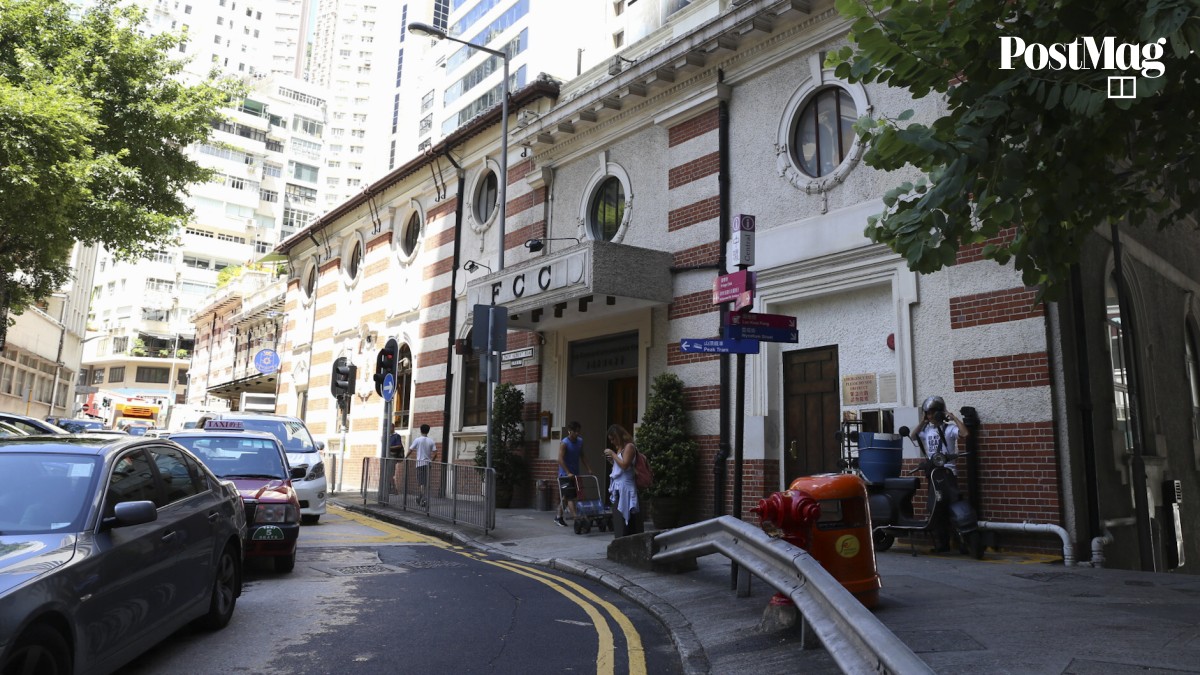
The architectural provenance of the Foreign Correspondents' Club's current home is rooted not in the dissemination of news, in the preservation of perishable goods. The structure at Number 2 Lower Albert Road, synonymous with press freedom debates and jazz nights, began its existence as the Old Dairy Farm Depot. Its creation in 1892 was the physical manifestation of a sanitary crusade led by Sir Patrick Manson, a Scottish physician later renowned as the father of tropical medicine. Manson, appalled by the disease-ridden milk supplies available in the colony, frequently sourced from cattle kept in squalid, unventilated tenement basements, founded the Dairy Farm Company in 1886. His objective was to introduce hygienic, disease-free milk to Hong Kong, a mission that required not just a farm in Pok Fu Lam, a sophisticated cold chain network terminating in the heart of the city. The original 1892 depot, designed by the architectural firm Danby & Leigh (precursors to the venerable Leigh & Orange), was a low-rise industrial constructed to withstand the subtropical humidity. The building's design employed a distinctive "blood and bandages" aesthetic, a colloquialism for the polychrome brickwork that alternated bands of red brick with white stucco. This Victorian Eclectic style, heavily influenced by the Arts and Crafts movement, served a dual purpose: it provided a clear visual identity for the burgeoning company and utilized the thermal mass of the brick to insulate the cold storage chambers within. The structure was sited strategically at the head of Ice House Street, a geographical nod to the colony's earlier ice trade, replacing the imported blocks of frozen lake water from New England with locally manufactured refrigeration. By 1913, the commercial success of the Dairy Farm Company necessitated a serious expansion. The depot was enlarged to encompass what is distinguished as the North Block, the section currently occupied by the FCC. This expansion was not a replication of the original storage facility a functional diversification. The renovated complex housed a butchery, a pie-making section, a delicatessen, and a residence for the general manager. The architectural continuity was maintained through the extension of the banded brick facade, creating a unified, if asymmetrical, complex that wrapped around the difficult, sloping corner of Glenealy and Lower Albert Road. The interior was a labyrinth of insulated chambers, thick-walled and heavy-doored, designed to keep the tropical heat at bay. It was during this era that the building earned its enduring moniker, "The Fridge," a nickname that would later be adopted by the journalists who drank within its cooled walls. The depot's function as the colony's larder made it a strategic asset during the Japanese occupation of Hong Kong from 1941 to 1945. While the Dairy Farm's herd in Pok Fu Lam was decimated, the cattle shipped to Guangzhou to feed Japanese troops or slaughtered for food, the depot building itself survived the bombardment. yet, it was not spared from looting. The Japanese military administration commandeered the facility, utilizing its cold storage capabilities for their own supply lines. The "blood and bandages" brickwork, by then a familiar landmark in Central, stood as a silent witness to the deprivation of the occupation years, its shelves stripped of the butter and beef that had once signaled colonial affluence. Post-war recovery saw the Dairy Farm Depot return to its commercial operations, the urban fabric of Hong Kong was shifting. As the city grew vertically in the 1950s and 60s, the low-rise depot began to look like an anachronism amidst the emerging skyline of steel and glass. The operational requirements of the Dairy Farm Company also evolved; the logistical challenges of operating a major cold storage facility in the congested heart of Central became increasingly untenable. By the 1970s, the company prepared to relocate its headquarters and distribution operations to more spacious facilities in the New Territories. The depot, once the pinnacle of hygienic modernity, was gradually emptied of its carcasses and milk churns. In the late 1970s, the building fell into a state of disuse that bordered on abandonment. The Dairy Farm Company vacated the premises entirely, trading the site for land elsewhere in a deal with the colonial government. For several years, the structure sat rotting in the humid air, its stucco peeling and its red bricks darkening with grime. It became a ghost in the center of the city, a "sleeping beauty" awaiting a new purpose. The interior, stripped of its refrigeration equipment, retained the eerie, damp chill of its former life. The heavy insulation that had once protected blocks of ice trapped the musty air of neglect. This period of vacancy was serious for the building's survival. In a city notorious for its ruthless redevelopment pattern, where heritage frequently bows to real estate valuation, the Old Dairy Farm Depot was a prime candidate for demolition. Developers eyed the corner lot greedily, envisioning high-rise commercial towers that could maximize the plot ratio. The government, holding the lease, faced pressure to release the land for auction. The building's Grade II historic status, which it would receive in 1981, was not yet a shield strong enough to guarantee its future. It was a crumbling relic of the Victorian era, standing obstinately at the top of the steep slope, its "blood and bandages" facade serving as a tattered reminder of a slower, lower-density Hong Kong. It was into this architectural void that the Foreign Correspondents' Club would eventually step. The club, displaced from its quarters in Sutherland House and desperate for a permanent home, identified the derelict North Block as a chance sanctuary. The match was improbable: a club of wordsmiths seeking refuge in a meat locker. Yet, the very features that made the building obsolete for modern logistics, the thick walls, the windowless cold rooms, the central location, offered a unique, if challenging, canvas for a private club. The transformation from cold storage to social hub would require not just renovation, a complete reimagining of the space, turning the chambers that once held frozen sides of beef into the Main Bar and the Verandah. By 1982, the deal was struck. The FCC secured the lease for the North Block, while the South Block was for the Fringe Club, an arts organization. The partition of the complex marked the end of its unitary industrial history and the beginning of its bifurcated cultural life. The architects tasked with the conversion faced the formidable job of carving windows into the blind walls of the cold stores and exorcising the lingering odors of the butchery. The "Fridge" was about to be thawed, its industrial heritage preserved not as a museum piece, as the living shell for the city's most raucous and uninhibited forum. The banded brickwork, once a signifier of sanitary milk, was poised to become the icon of the free press in Asia.
Acquisition and Renovation of the Ice House Street Premises
The expulsion from Sutherland House in 1982 marked the end of the Foreign Correspondents' Club's nomadic existence and the beginning of its tenure at one of Hong Kong's most distinctive colonial relics. For fourteen years, the club had occupied the upper floors of the waterfront tower, famed for a men's lavatory that offered a panoramic "loo with a view" of Victoria Harbour. By the early 1980s, yet, the twin pressures of a swingeing rent increase, demanded by a landlord eyeing the property boom, and the building's impending demolition forced the Board of Governors to seek immediate refuge. The acquisition of the new premises was a feat of personal diplomacy rather than commercial negotiation. Club President Donald Wise, a veteran war correspondent for the *Daily Mirror*, bypassed standard bureaucratic channels and appealed directly to the Governor, Sir Murray MacLehose. Wise initially requested the use of Murray House, a former officers' mess, was refused; the building was destined to be dismantled and moved to Stanley. Instead, MacLehose offered a derelict structure at the top of Ice House Street: the Old Dairy Farm Depot. Constructed in 1892 and expanded in phases through 1925, the depot was a low-rise industrial anomaly in a district rapidly filling with glass-and-steel skyscrapers. Designed by the firm Danby & Leigh (precursors to Leigh & Orange), the building served originally as a cold storage warehouse for milk and meat, its thick walls insulated to combat the subtropical heat. The architecture was a clear example of the "blood and bandages" style, characterized by polychromatic red brick and white stucco banding. By 1982, yet, the North Block was a hollow shell, having been abandoned by the Dairy Farm Company in the 1970s. The lease terms negotiated by Wise and his committee were favorable not free. Contrary to the persistent myth of a "peppercorn rent," the FCC was required to pay a market rate, though the government facilitated the move with a substantial loan to cover the massive renovation costs. The initial lease was set for five years, a duration that would later settle into a seven-year renewal pattern, creating a recurring rhythm of existential anxiety for the club's leadership. The renovation itself was a chaotic, member-led enterprise. absence the funds for a marquee architectural firm, the fit-out was managed by a "moving committee" that included Treasurer Bill Seitz and board member Mike Keats. The construction was executed by a builder named Eddie Ko on an ad hoc basis, with design decisions frequently made on-site. Keats personally designed the Main Bar, the club's nerve center, while he and photographer Hugh van Es scoured Hollywood Road for antique light fixtures to impart a sense of instant history. The result was a clubhouse that felt lived-in from the moment Governor Edward Youde officiated the opening in November 1982. The physical transformation of the depot turned the FCC into a of the press, the lease remained its Achilles' heel. For four decades, the government renewed the tenancy in seven-year increments, treating the club as a benign cultural asset. This shifted sharply following the imposition of the National Security Law in 2020. The lease that expired on January 1, 2023, was not renewed for the standard seven years. Instead, the government offered a truncated three-year term, valid only until January 2026.
Lease Era
Duration
Key Conditions
1982, 2015
7 Years (Standard)
Market rent; government loan for initial renovation; heritage conservation requirements.
2016, 2023
7 Years
Continued market rent; increased scrutiny following 2018 Andy Chan event.
2023, 2026
3 Years
Standard market rent; new clauses allowing termination for "national security" interests.
The 2023 lease introduced explicit clauses that fundamentally altered the landlord-tenant relationship. The government inserted standard provisions applicable to all state-owned properties, allowing for lease termination with immediate effect if the usage was deemed contrary to national security interests. This legal method placed the club on probation, transforming the heritage building from a sanctuary into a monitored space. The rent remained at market levels, approximately HK$600, 000 per month according to 2022 reports, forcing the club to raise membership fees to ensure financial solvency even as its tenure became less secure. even with these pressures, the Ice House Street premises remains the physical anchor of the FCC's identity. The Main Bar, with its curved timber counter and walls lined with photos of wars and revolutions, serves as a "neutral ground" where diplomats, spies, tycoons, and journalists intersect. The building's Grade I historic status, confirmed in 2009, theoretically protects the structure from demolition, it offers no guarantee regarding the identity of its occupants. As the 2026 expiration date method, the "Old Dairy Farm" stands as a testament to the club's resilience and a symbol of the narrowing space for foreign institutions in the city.
The 2018 Andy Chan Talk and Victor Mallet Visa Denial
The Hilton Era and Vietnam War Intelligence Exchange
The 2018 invitation of Andy Chan Ho-tin to the Foreign Correspondents' Club marked the precise moment Beijing's patience with Hong Kong's liberal anomalies expired. Until August of that year, the FCC had operated under the assumption that its colonial-era privileges and status as a neutral observer offered a shield against direct state intervention. The club invited Chan, the convenor of the Hong Kong National Party (HKNP), to speak at its "Club Lunch" series. The HKNP was a fringe group, small in number yet vocal in its advocacy for Hong Kong independence, a position Beijing viewed not as political dissent as an existential threat to sovereignty. State mobilized immediately upon the announcement of the event. The Office of the Commissioner of the Ministry of Foreign Affairs in Hong Kong sent representatives to the club, demanding the cancellation of the talk. This was not a subtle hint; it was a direct instruction. The FCC, led by its board and Vice President Victor Mallet, refused. They the club's long-standing policy of hosting speakers from across the political spectrum, a defense that had held for decades. This time, the calculation was wrong. The government did not see a debate; it saw a foreign organization providing a platform for sedition on Chinese soil. On August 14, 2018, the event proceeded in a besieged atmosphere. Police vans lined Lower Albert Road. Pro-Beijing protesters gathered outside, waving flags and denouncing the club as a venue for traitors. Inside the dining room, Chan delivered a speech titled "Hong Kong Nationalism: A Politically Incorrect Guide to the Real Hong Kong." He described China as a colonial power and claimed the city was being "annexed and destroyed." He called for the United States to impose sanctions on Hong Kong and China, a request that anticipated the geopolitical friction of the coming years. Victor Mallet, the Asia news editor for the *Financial Times*, chaired the session. He introduced Chan, reiterated the club's neutral stance, and managed the Q&A. For the state, Mallet's presence on the dais made him the face of the defiance. The retaliation was bureaucratic, silent, and devastatingly. In October 2018, two months after the talk, the Hong Kong Immigration Department rejected Mallet's application to renew his work visa. No reason was provided. This broke with decades of precedent where foreign journalists from major western outlets were granted visas as a matter of routine. When Mallet attempted to re-enter Hong Kong from Bangkok on October 7, he was detained at the border for four hours and granted only a seven-day entry permit, rather than the standard six months for British citizens. The final blow came on November 8, 2018. Mallet attempted to enter Hong Kong as a visitor. Immigration officers questioned him for four hours before barring his entry entirely. The government refused to explain the decision, with Chief Executive Carrie Lam stating only that immigration authorities act "in accordance with the law." The message was unambiguous: the visa system had been weaponized. A senior editor of the *Financial Times* had been expelled from a global financial center for chairing a lunch.
Timeline of the Victor Mallet Expulsion (2018)
Date
Event
State Action
August 3, 2018
Ministry of Foreign Affairs demands cancellation
Diplomatic pressure applied to FCC board.
August 14, 2018
Andy Chan talk held at FCC
Police deployment; condemnation by CE Carrie Lam.
September 24, 2018
Hong Kong National Party banned
Gazetted as an unlawful society.
October 2, 2018
Mallet's visa renewal rejected
Immigration Department refuses work permit.
November 8, 2018
Mallet barred as visitor
Denied entry at border control.
Parallel to the visa action, the government opened a second front: the club's lease. Former Chief Executive CY Leung, acting as a relentless attack dog for Beijing's interests, began a public campaign questioning why the government rented the prime Central property to the FCC. He characterized the lease as a "token rent" arrangement, though the club insisted it paid market rates of approximately HK$580, 000 per month. Leung's rhetoric shifted the ground beneath the club's feet. He equated the hosting of Andy Chan to providing a platform for "criminals and terrorists," framing the lease not as a commercial agreement as a political subsidy that could be revoked. This period established the "Red Line" that would come to define the post-2019 era. Before the Andy Chan talk, the boundaries of permissible speech in Hong Kong were fuzzy, tested through practice and judicial review. After the talk, the boundary was absolute: any discussion of independence, even in a theoretical or journalistic context, was prohibited. The expulsion of Mallet demonstrated that no foreign passport or prestigious masthead offered immunity. The FCC, once a sanctuary where the rules of the mainland did not apply, found itself fully exposed to the sovereignty it had sought to observe from a distance. The club's subsequent lease renewals would become contingent on strict adherence to new national security clauses, a direct legacy of the 2018 confrontation. The Andy Chan affair was not a visa dispute; it was the end of the FCC's era of exceptionalism.
Impact of the 2020 National Security Law on Club Discourse
The imposition of the National Security Law (NSL) on June 30, 2020, did not alter the legal environment for the Foreign Correspondents' Club, Hong Kong; it fundamentally rewired the organization's survival logic. For decades, the FCC operated as a self-declared "neutral ground" where dissidents, officials, and revolutionaries could debate under the protection of colonial, and later autonomous, free speech laws. The NSL, drafted in Beijing and promulgated without local legislative oversight, dismantled this shield. It introduced four criminal categories, secession, subversion, terrorism, and collusion with foreign forces, that were deliberately vague. For the FCC, the law transformed the club's physical location at 2 Lower Albert Road from a sanctuary into a liability. The club's collision with the new security apparatus was prefigured by the expulsion of Victor Mallet in 2018. Mallet, the Asia news editor for the *Financial Times* and FCC Vice-President, had chaired a lunchtime talk by Andy Chan, convenor of the pro-independence Hong Kong National Party. The Hong Kong government, under pressure from the Ministry of Foreign Affairs, refused to renew Mallet's work visa, exiling him. This incident established the "Red Line": discussing independence was no longer treated as free speech as a security threat. When the NSL arrived in 2020, it codified this intolerance, expanding the danger zone to include broad criticisms of the central government or support for sanctions. The most significant rupture in club discourse occurred in April 2022, during the presidency of Keith Richburg. The Board of Governors voted to suspend the Human Rights Press Awards (HRPA), a prestigious recognition of Asian journalism that the FCC had hosted for twenty-five years. The decision was driven by the specific legal toxicity of *Stand News*, a pro-democracy outlet that had been forced to close in December 2021 after police raided its newsroom and arrested senior staff on sedition charges. *Stand News* had submitted multiple entries to the HRPA, and several were slated to win. Internal debates revealed a fracture between the club's identity as a beacon of press freedom and its reality as a business holding a government lease. Legal advice sought by the Board suggested that conferring awards upon a "seditious" organization could be interpreted as aiding and abetting criminal activity under the NSL or colonial-era sedition laws. Richburg, in a letter to members, stated the club did not wish to "unintentionally violate the law," citing the "significant areas of uncertainty" created by the new security terrain. He later admitted in a leaked recording that he had consulted the Chinese Foreign Ministry's office in Hong Kong prior to the decision, a move he described as necessary to avoid surprising officials. The cancellation provoked an immediate revolt. Eight members of the Press Freedom Committee, including prominent journalists from the *Washington Post* and *The Atlantic*, resigned in protest. They argued that the FCC had engaged in preemptive self-censorship, doing the government's work for it. The awards were subsequently transferred to Arizona State University, removing them from Hong Kong's jurisdiction entirely. This episode marked the end of the FCC's era of defiance. The discourse within the club shifted from aggressive advocacy to "quiet diplomacy," a euphemism for avoiding confrontation to preserve the institution's physical foothold in Central. The government's use over the FCC was formalized through the lease renewal process in late 2022. The club occupies a Grade I historic building owned by the government. Historically, leases were renewed for seven-year terms, providing stability for the club's operations and its 100+ staff. yet, the lease expiring in January 2023 became a negotiation hostage. Pro-Beijing politicians and state-backed media outlets, such as *Ta Kung Pao*, frequently attacked the club, labeling it a "base for anti-China forces" and demanding its eviction. In November 2022, the government offered a renewal, yet the terms were punitive. The tenure was slashed from seven years to three years, placing the club on a permanent probationary footing. More serious, the new lease included a "standard tenancy provision" introduced for all government properties. This clause allowed the landlord to terminate the lease immediately, without compensation, if the tenant engaged in acts endangering national security. The definition of such acts rests entirely with the government. This clause hung a sword over the Main Bar. Every speaker invited, every panel hosted, and every statement issued carried the theoretical risk of triggering immediate eviction and insolvency. The enactment of the Safeguarding National Security Ordinance (Article 23) in March 2024 further tightened the vice. This local legislation expanded on the 2020 NSL, introducing new offenses such as "external interference" and "theft of state secrets." The "external interference" clause is particularly hazardous for a club composed of foreign correspondents who routinely interact with foreign diplomats and overseas organizations. The law criminalizes collaboration with "external forces" to influence local policy, a definition broad enough to criminalize routine journalistic advocacy or the hosting of foreign politicians serious of Beijing. Consequently, the club's public discourse has withered. The "Speaker's Wall," once a roster of the city's most controversial figures, from activists like Joshua Wong to establishment hardliners like Regina Ip, has become notably less confrontational. The club continues to host government officials and business leaders, yet the platform for opposition voices has largely. The Board focuses heavily on professional workshops, social events, and non-political topics. Statements on press freedom violations, once issued regularly following arrests or police raids, have become rare or carefully calibrated to avoid crossing the undefined red lines. The transformation is quantifiable. Pre-2020, the FCC was a primary node in Hong Kong's civil society network. By 2026, it functions as a professional enclave operating under strict, if unwritten, parameters. The "business members", bankers, lawyers, and associates who make up the majority of the revenue base, prioritize the club's survival as a social venue. The journalist members, facing the threat of visa denials and arrest, must navigate a workspace where the very act of reporting can be construed as a crime. The FCC remains open, the price of its survival has been the sterilization of its voice.
Comparison of FCC Hong Kong Operations: Pre-NSL vs. Post-NSL
Operational Metric
Pre-NSL Era (2010, 2019)
Post-NSL Era (2020, 2026)
Lease Tenure
7 Years (Standard Commercial Terms)
3 Years (Probationary Terms)
Termination Clause
Standard breach of contract
Immediate termination for "National Security" interests
Speaker Policy
Open Platform (e. g., Andy Chan, 2018)
Risk Averse / "Quiet Diplomacy"
Human Rights Press Awards
Hosted annually at the Club
Cancelled in 2022; moved to USA
Advocacy Stance
Frequent public statements on arrests
Rare, diluted statements; focus on "survival"
Visa Security
Routine renewals (rare exceptions)
Weaponized (e. g., Victor Mallet expulsion)
The data shows a clear correlation between the introduction of the NSL and the contraction of the FCC's civil liberties footprint. The lease renewal of 2023 serves as the definitive document of this new era, legally binding the club's existence to its political compliance. The "external interference" provisions of Article 23 ensure that this compliance must be active, not passive. The club has not been shut down by the authorities; rather, it has been neutralized through legal and economic coercion, allowed to exist only so long as it ceases to function as a hub for dissent.
Suspension of the Human Rights Press Awards in 2022
Architectural History of the Old Dairy Farm Depot (1892, 1982)
On April 25, 2022, the Foreign Correspondents' Club, Hong Kong, shattered a twenty-five-year tradition by suspending the Human Rights Press Awards (HRPA). The decision, announced mere days before the scheduled ceremony (World Press Freedom Day, May 3), marked the definitive moment the club surrendered its role as a vocal advocate for press freedom in exchange for institutional survival. Club President Keith Richburg, a veteran correspondent for the *Washington Post*, issued a statement citing "significant areas of uncertainty" regarding the law and a desire not to "unintentionally violate" the National Security Law (NSL). This suspension was not a bureaucratic delay; it was a preemptive capitulation to a legal system that had revived colonial-era sedition laws to target journalists. The catalyst for this collapse was *Stand News*, a pro-democracy news outlet forced to shut down in December 2021 following a raid by national security police and the arrest of its senior editors. During the judging process for the 2022 awards, *Stand News* had secured nine accolades, including four top prizes and five merits. The FCC board faced a clear legal opinion: conferring awards upon an outlet already under investigation for sedition could be interpreted by authorities as aiding and abetting criminal activity. The legal advice given to the board was blunt, warning that in a national security trial, the club "would not get a fair hearing." The internal debate revealed a fracture in the club's identity. Richburg and the majority of the board argued that proceeding with the awards posed an "existential risk" to the club itself, threatening the employment of its 100 staff members and the physical premises on Lower Albert Road. The logic was binary: cancel the awards or risk asset seizure and imprisonment. This "survivalist" stance, yet, provoked an immediate revolt within the club's Press Freedom Committee. Eight members of the committee resigned in protest, including Shibani Mahtani of the *Washington Post*, Timothy McLaughlin of *The Atlantic*, and Mary Hui of *Quartz*. Mahtani publicly stated she felt "deepest regret" and could not stand by the decision, characterizing it as emblematic of the self-censorship consuming Hong Kong's civil society. The specific awards slated for *Stand News* remained officially unpublished by the FCC, creating a "ghost list" of honorees. Leaks and subsequent confirmations revealed that the suppressed work included hard-hitting investigations into the 2019 Yuen Long mob attacks and the conditions within Hong Kong's "smart prisons." By burying these awards, the FCC participated in the erasure of the very journalism the HRPA was founded to protect. The irony was absolute: an organization established to champion free speech silenced itself to avoid the ire of a government that speech. The suspension of the HRPA was inextricably linked to the club's precarious tenure at the Old Dairy Farm Depot. The FCC's lease was set to expire in January 2023, and pro-Beijing figures, including former Chief Executive CY Leung, had long agitated for the government to evict the club. The government used the lease renewal as use. In November 2022, seven months after the awards were scrapped, the government granted the FCC a new lease. The terms were punitive: the duration was slashed from the standard seven years to three years, and a new clause allowed the government to terminate the tenancy immediately, without the standard three-month notice, if the club acted in a way contrary to "national security." This new lease codified the club's neutered status. The FCC had secured its physical home, the cost was its voice. The "national security" termination clause serves as a permanent Sword of Damocles, ensuring that the board must constantly weigh every statement, event, and panel discussion against the risk of immediate eviction. The club that once hosted independence activist Andy Chan in 2018, Foreign Ministry warnings, had by late 2022 accepted a contract that legally bound it to political obedience. The Human Rights Press Awards did not die, they were forced into exile. In May 2023, the Walter Cronkite School of Journalism and Mass Communication at Arizona State University (ASU) assumed responsibility for the awards. The transition moved the administration of the contest to the United States, placing it beyond the reach of Hong Kong's security apparatus. When ASU announced the 2023 winners, they retroactively acknowledged the suppressed 2022 winners, giving formal recognition to the *Stand News* journalists. The awards operate with a focus on "Newsrooms in Exile," a category that grimly reflects the reality of the Hong Kong press corps. The from the 2022 suspension continues to define the FCC's operations through 2026. The club remains open, serving drinks and hosting social events in its heritage building, its relevance as a bastion of free expression has evaporated. The resignation of the Press Freedom Committee members left a void that has been filled by a more cautious, business-oriented leadership. The "survival" strategy succeeded in keeping the doors open, it transformed the FCC from a protagonist in the fight for press freedom into a spectator, operating on a short leash held firmly by the Hong Kong government.
Timeline of the 2022 HRPA Suspension and Aftermath
Date
Event
Details
Dec 29, 2021
Stand News Raid
National security police raid Stand News; editors arrested; outlet closes.
Apr 23, 2022
Board Vote
FCC Board votes to suspend the awards. Dan Strumpf (WSJ) is the sole dissenter.
Apr 25, 2022
Public Announcement
Keith Richburg announces suspension citing "legal uncertainty."
Apr 25-26, 2022
Committee Resignations
8 members of the Press Freedom Committee, including Mahtani and McLaughlin, resign.
Nov 30, 2022
Lease Renewal
Govt grants 3-year lease (down from 7) with immediate "national security" termination clause.
May 3, 2023
ASU Takeover
Arizona State University announces 2023 winners and acknowledges 2022 winners.
Lease Renewal Negotiations and National Security Clauses
The weaponization of the Foreign Correspondents' Club's tenancy began in earnest on August 14, 2018. On that day, the club hosted a luncheon address by Andy Chan Ho-tin, convener of the Hong Kong National Party, a group advocating for independence from China. The event proceeded even with strenuous objections from the Chinese Ministry of Foreign Affairs and the Hong Kong government. The retaliation was swift and. In October 2018, the government denied a work visa renewal for Victor Mallet, the *Financial Times* Asia news editor and FCC vice-president who had chaired the session. Mallet was expelled from the city, a move that signaled the end of the club's diplomatic immunity. From that moment, the lease for the Old Dairy Farm Depot, the club's headquarters since 1982, ceased to be a mere administrative matter and became the primary lever of state control. Former Chief Executive Leung Chun-ying, serving as a vice-chairman of the Chinese People's Political Consultative Conference, spearheaded the public campaign against the club. Leung openly questioned why the government leased a prime heritage asset at a "token rent" to an organization that provided a platform for separatism. Although the FCC actually paid market rent, approximately HK$550, 000 to HK$600, 000 per month at the time, the narrative of an ungrateful, privileged colonial relic took root. The lease, set to expire on January 1, 2023, became the focal point of the club's existential anxiety. As the 2023 deadline method, the Government Property Agency (GPA) broke with its historical pattern. Previous renewals had been seven-year terms, providing stability for the club's operations and staff. Throughout 2022, the GPA maintained a conspicuous silence, leaving the club in a state of limbo. This uncertainty coincided with the imposition of the National Security Law (NSL) in 2020, which fundamentally altered the legal ground beneath the club's feet. The Board of Governors, led by President Keith Richburg, faced an impossible calculation: the authorities and face immediate eviction, or demonstrate compliance to secure a future. The club's leadership chose the latter. In April 2022, eight months before the lease expiration, the FCC Board suspended the Human Rights Press Awards (HRPA). The awards, which the club had hosted for a quarter-century, were slated to recognize investigative work on the 2019 protests and the subsequent crackdown. Richburg legal advice warning that proceeding could expose the club and its staff to criminal prosecution under the NSL. The decision caused a fracture within the organization; three members of the Press Freedom Committee, including former president Eric Wishart, resigned in protest. The cancellation was widely interpreted by observers as a preemptive concession to the government, a signal that the FCC would no longer cross the "red lines" drawn by Beijing. The government's offer arrived in November 2022, less than two months before the eviction deadline. The terms confirmed the new reality. The lease duration was slashed from seven years to three years, a tenure short enough to keep the club on constant probation. More significantly, the new agreement included "standard clauses" explicitly tied to national security. The new provisions granted the government the right to terminate the tenancy immediately, without compensation, if the club's use of the premises was deemed contrary to the interests of national security. While the government insisted this was a standard requirement for all state-owned property leases, its application to a press club, whose core function involves hosting diverse and frequently serious viewpoints, created a permanent sword of Damocles. The clause deputized the club's board as self-censors; any event, speaker, or exhibition that angered the authorities could trigger not just a visa denial, the total loss of the club's home. The financial terms also reflected the club's diminished status. The rent was adjusted to open market rates, stripping away any pretense of government subsidy or support for the press as a public good. The club was treated strictly as a commercial tenant occupying a Grade I historic building. To cover these costs and the uncertainty of the short lease, the club was forced to raise membership fees and debentures, further shifting its demographic toward the wealthy business elite and away from the working journalists it was founded to serve. The "short leash" model established in 2023 was not a temporary measure. In January 2026, the lease pattern reset once again. Consistent with the precedent set three years prior, the government granted another three-year extension, valid until January 2029. This renewal pattern has institutionalized a state of permanent vulnerability. The three-year term ensures that the club is perpetually in a pre-negotiation phase, discouraging long-term planning or bold editorial stances that might jeopardize the renewal. The transformation of the lease from a property contract into a political behavior modification tool is clear in the comparison of terms over the last decade.
FCC Hong Kong Lease Terms Evolution (2016, 2029)
Lease Period
Duration
Termination Clause
Political Context
2016 , 2023
7 Years
Standard commercial notice ( 6 months)
Pre-NSL. Club hosted pro-independence speakers (2018) without immediate eviction risk.
2023 , 2026
3 Years
Immediate termination for National Security interests; 3 months for other reasons.
Post-NSL. HRPA cancelled. "Standard clauses" introduced to enforce compliance.
2026 , 2029
3 Years
Immediate termination for National Security interests.
Institutionalized probation. Club operates as a "social venue" with reduced advocacy profile.
The acceptance of these terms marked a quiet capitulation. By 2026, the FCC had survived, yet it was a different entity than the one that the KMT in 1943 or the colonial authorities in the 1960s. The lease negotiations proved that the physical building, the "unrivaled ambience" of the Old Dairy Farm Depot, was more valuable to the membership than the uncompromising defense of press freedom that had once defined the club's soul. The government had successfully used the landlord-tenant relationship to achieve what direct censorship could not: the neutralization of the FCC as a platform for dissent, all without ever having to formally shut it down. The club remains open, the bar serves drinks, and the jazz band plays, the lease in the safe ensures the silence is kept.
Membership Demographics and Financial Solvency Metrics
Acquisition and Renovation of the Ice House Street Premises
The financial and demographic reality of the Foreign Correspondents' Club (FCC) in Hong Kong presents a clear paradox: the institution is a trade guild for journalists that is almost entirely subsidized by the very bankers, lawyers, and shipping magnates they cover. While the club's constitution mandates that the Board of Governors maintains a journalist majority, the rank-and-file membership tells a different story. As of the 2024 membership survey, "Associate" members, non-media professionals, comprised approximately 71. 5% of the respondents, while "Correspondent" and "Journalist" members combined accounted for less than 20%. This imbalance is not a statistical footnote; it is the club's primary economic engine. The in financial contribution is aggressive. In 2023, the club raised the joining fee for Associate members to HK$45, 000, while the fee for bona fide correspondents remained at a protected HK$3, 850. This cross-subsidy model allows foreign reporters, frequently operating on shrinking freelance budgets or diminishing bureau stipends, to access prime real estate in Central Hong Kong. The "Associate" category, filled by the city's financial elite, underwrites the cheap beer and workspace for the press corps. This mirrors the 19th-century *comprador* system, where foreign traders and local merchants formed symbiotic, if unequal, financial alliances to navigate the complexities of the China trade.
Membership Category
Approx. Share (2024)
Joining Fee (2025)
Economic Function
Associate
~70-72%
HK$45, 000
Primary Revenue Source
Correspondent
~10-12%
HK$3, 850
Constitutional Legitimacy
Journalist (Local)
~5-7%
HK$3, 850
Local Industry Link
Corporate/Diplomatic
~10%
HK$250, 000+ (Corp)
Capital Injection
The club's solvency hinges entirely on its lease for the Old Dairy Farm Depot at 2 Lower Albert Road. For decades, the FCC enjoyed a standard seven-year lease at concessionary rates, a colonial hangover that treated the press as a protected class. That era ended abruptly in the 2020s. Following the imposition of the National Security Law (NSL) and the club's controversial hosting of pro-independence activist Andy Chan in 2018, the Hong Kong government weaponized the property. In May 2023, the government renewed the lease not for the usual seven years, for a probationary three-year term ending in January 2026. The new contract included a specific clause allowing immediate termination for "national security" breaches. also, the rent was adjusted to "market rate," estimated to be upwards of HK$610, 000 per month based on 2021 valuations. This shift from a subsidized cultural institution to a commercial tenant placed immense pressure on the club's balance sheet. To cover these surging operational costs, the Board was forced to increase monthly subscription fees in February 2025, raising the standard rate to HK$1, 375. Financial metrics from 2020 to 2025 reveal a club fighting a war on two fronts: economic attrition and political existentialism. The COVID-19 pandemic decimated food and beverage revenue, the club's daily cash flow, resulting in operational deficits during the lockdown years. Even as the city reopened, the "brain drain" of foreign professionals impacted the Associate membership base. Simultaneously, the relocation of major media bureaus (such as The New York Times moving its digital news hub to Seoul) eroded the core Correspondent demographic. Internal surveys conducted by the club paint a grim picture of the membership's mood. A poll released in April 2025 indicated that 62% of respondent members felt the professional environment had worsened since 2023. More serious for the club's long-term viability, over 30% of journalists indicated they were considering leaving Hong Kong due to press freedom concerns. This chance exodus threatens to violate the club's own Articles of Association, which require a specific quorum of professional journalists to govern. If the journalist count drops the constitutional threshold, the FCC risks legally devolving into a generic dining club, stripping it of the political shield that has historically protected it. The "Silver" membership category also presents a demographic time bomb. of the membership consists of retirees who have held cards for decades. These members pay reduced dues and, while loyal, do not drive the high-margin bar spend associated with active working professionals. The club has attempted to offset this by aggressively courting younger journalists with "Early-Career" promotions, offering reduced monthly fees of HK$250 for the year. Yet, the uptake is limited by the shrinking number of visas granted to foreign reporters. By early 2026, the FCC stands at a precarious intersection. The three-year lease renewal pattern places the club on a permanent probation, where financial solvency is guaranteed only by political acquiescence. The government's ability to evict the club with three months' notice, or immediately on security grounds, means that the FCC's credit rating is less about its bank balance and more about its behavior. The club is solvent, only as long as its landlord permits it to exist. The 2023 lease terms transformed the building from a of the press into a revocable privilege, dependent on the continued willingness of bankers to pay HK$45, 000 for the right to drink where the journalists used to write.
Preservation Status of the Grade I Historic Building
The physical seat of the Foreign Correspondents' Club is not a clubhouse a architectural relic of colonial industry, its preservation status inextricably bound to the political compliance of its tenants. The Old Dairy Farm Depot, located at 2 Lower Albert Road, stands as one of the few remaining examples of late Victorian industrial architecture in Central. Constructed in stages starting in 1892, with the North Block, the FCC's specific domain, added in 1913, the building was originally designed by the firm Danby & Leigh ( Leigh & Orange). Its primary function was utilitarian: a cold storage warehouse for ice, imported butter, and cattle meat, serving the colonial elite's demand for hygienic dairy products in a subtropical climate.
Architecturally, the structure is defined by its "blood and bandages" brickwork, a colloquialism for the polychromatic interplay of red brick and white stucco bands. This Edwardian eclectic style, featuring high ceilings and deep verandas suited for ventilation, survived the Japanese occupation (during which the depot was looted) and the rapid vertical redevelopment of the 1970s. While the Dairy Farm Company vacated the premises in the 1970s, the building escaped demolition, a fate that befell the adjacent Murray House before its relocation. In 1982, the FCC secured the lease for the North Block, while the South Block became the home of the Fringe Club, initiating a celebrated era of adaptive reuse that predated the city's formal heritage conservation policies.
The preservation status of the building was formalized on December 18, 2009, when the Antiquities Advisory Board (AAB) accorded the entire Old Dairy Farm Depot "Grade I" historic status. This designation is defined as applying to "buildings of outstanding merit, which every effort should be made to preserve if possible." Yet, in the Hong Kong legal framework, Grade I status is administrative rather than statutory; it does not offer the absolute protection of a "Declared Monument." Consequently, the building's survival has rested less on ironclad legal immunity and more on the government's discretionary management of its property portfolio. The FCC, as the tenant, bears the heavy financial load of maintaining the aging masonry, a task complicated by the humid climate which relentlessly attacks the porous brick and stucco facade.
Timeline of Preservation and Lease Milestones (1892, 2026)
1892
Original construction of the South Block by Dairy Farm Co.
1913
Expansion adding the North Block (current FCC premises).
1982
FCC leases the North Block; adaptive reuse begins.
2009
Antiquities Advisory Board confirms Grade I Historic Status.
2018
Andy Chan talk controversy triggers calls for lease termination.
2023
Lease renewed for reduced 3-year term with National Security clauses.
2026
Lease extended for another 3-year term (to 2029) amidst stricter maintenance oversight.
The relationship between the building's heritage value and the club's tenure shifted drastically following the 2018 event featuring pro-independence activist Andy Chan. The lease, previously renewed in seven-year intervals (e. g., 2016, 2023), became a political instrument. In November 2022, the Government Property Agency offered a renewal of only three years, commencing January 2, 2023. This new contract introduced standard clauses applicable to all government properties, explicitly allowing for termination with three months' notice, or immediate eviction if the usage was deemed contrary to the interests of national security. The heritage site became a conditional privilege, revocable upon political infraction.
By early 2026, the preservation narrative had evolved again. In January 2026, the government granted another three-year extension, securing the club's presence until January 2029. This renewal occurred against a backdrop of intensified building safety enforcement across Hong Kong, following a catastrophic fire in a residential complex in late 2025. The new lease terms reportedly include rigorous compliance requirements for structural maintenance, placing the duty on the FCC to fund specialized conservation work for the 113-year-old North Block. The "blood and bandages" facade, once a symbol of colonial hygiene, serves as a metaphor for the club's position: a fragile, historic structure held together by the binding mortar of strict compliance and the constant scrutiny of the state.
Operational Constraints Under Article 23 Legislation (2024, 2026)
The enactment of the Safeguarding National Security Ordinance on March 23, 2024, marked the terminal point of the Foreign Correspondents' Club's historic role as an open sanctuary for dissent. While the 2020 National Security Law had introduced vague red lines, the 2024 legislation, colloquially known as Article 23, erected a concrete cage around the profession of journalism in Hong Kong. The ordinance, passed unanimously by the Legislative Council with a speed that precluded meaningful public debate, introduced specific criminal offenses that struck at the heart of the FCC's operational model: "external interference" and "theft of state secrets."
For a club defined by its "Foreign" designation, the "external interference" clause presented an existential legal hazard. The law criminalized collaboration with "external forces" to influence the formulation or execution of policy. In the context of 2024, inviting a foreign diplomat to speak on the club's podium, or issuing a statement criticizing government media restrictions, could be interpreted by prosecutors as colluding with external forces to undermine the state. The club's Board of Governors, once a vocal advocate for press freedom, found itself navigating a legal minefield where the mere act of hosting a debate could trigger police raids or asset freezes.
The "state secrets" provision proved equally debilitating for the club's core constituency of financial journalists. The definition of secrets was expanded to include information on the "economic or social development" of Hong Kong or China. This criminalized standard investigative reporting on economic downturns, real estate crises, or government policy shifts if the data was not officially released. The FCC, historically a hub where reporters traded tips and rumors over drinks, grew notably quieter. The risk that a casual conversation at the Main Bar could be construed as the trafficking of state secrets dampened the camaraderie that had defined the institution since its Chongqing days.
These legislative constraints were compounded by the club's precarious tenure at 2 Lower Albert Road. The three-year lease renewal secured in January 2023, set to expire on January 1, 2026, contained a "standard tenancy" clause explicitly allowing the government to terminate the agreement immediately and without compensation if the tenant engaged in acts endangering national security. This clause functioned as a sword of Damocles, hanging over every board meeting and event planning session between 2024 and 2026. The government no longer needed to prove a crime in court to evict the FCC; it only needed to declare a security risk. Consequently, the club's survival strategy shifted from defense of principles to strict lease compliance.
The chilling effect of this environment was illustrated not by a government arrest, by the actions of a Western media conglomerate. In July 2024, Selina Cheng, a reporter for the Wall Street Journal, was elected chair of the Hong Kong Journalists Association (HKJA). Weeks later, she was fired. Cheng stated that her editors had pressured her to withdraw from the election, claiming the role was incompatible with her employment. The incident revealed a grim reality for the FCC: the corporate media organizations that once anchored the club were enforcing the government's silence, preemptively removing staff who might attract official ire. The FCC issued a statement expressing "deep concern" regarding Cheng's dismissal, the target of its criticism was a foreign newspaper, not the Hong Kong administration, a safe choice that highlighted the club's diminished capacity to challenge local power.
Operational data from 2024 to 2026 reflects this contraction. The frequency of "hard news" events plummeted. The speaker list, once populated by opposition figures, activists, and controversial authors, became dominated by cultural commentators, wine experts, and non-political business figures. The Human Rights Press Awards, which the FCC had cancelled in 2022 citing legal risks, did not return. The "Wall" at the club entrance, once plastered with notes of support for detained journalists during the 2019 protests, remained sanitized, devoid of any material that could violate the sedition provisions of Article 23.
Membership demographics also shifted. As major news bureaus relocated their Asia headquarters to Singapore or Seoul, driven by the same "restructuring" that the Wall Street Journal in the Cheng case, the number of active Correspondent Members declined. The club increasingly relied on Associate Members (lawyers, bankers, and PR professionals) to sustain its finances. This demographic change altered the club's character, pushing it further toward a standard expatriate social club and away from its roots as a gritty press hub. The conversations at the bar were less likely to be about the latest arrests and more likely to concern school fees or property prices, as the remaining foreign community insulated itself from the city's political reality.
By late 2025, as the January 2026 lease expiry method, the FCC had completed its transformation. It had survived the initial purge of civil society organizations not by fighting, by submitting. The government's strategy of "patriots administering Hong Kong" had been extended to "patriots (or silent observers) drinking in Hong Kong." The club remained open, the jazz band played in Bert's, and the curry was still served in the Dining Room, the institution had been hollowed out. It retained the physical shell of the Old Dairy Farm Depot had shed the spirit of the Press Hostel.
The trajectory from 1700 to 2026 reveals a closing circle. Foreign presence in China began under the Canton System, strictly confined to the Thirteen Factories, monitored by the Co-Hong, and prohibited from entering the walled city. In 2026, the Foreign Correspondents' Club finds itself in a modern analogue: confined to a heritage building, monitored by national security clauses, and prohibited by law from engaging with the political reality outside its doors. The FCC survives, it does so as a museum piece, a preserved artifact of a bygone era of free inquiry, allowed to exist only so long as it remains silent.
Timeline of Operational Constraints (2020, 2026)
Date
Event
Operational Impact on FCC
June 30, 2020
National Security Law (NSL) Enacted
Introduction of vague "red lines." signs of self-censorship in speaker selection.
April 2022
Cancellation of Human Rights Press Awards
Preemptive suspension of a flagship event to avoid chance sedition charges.
January 2, 2023
Lease Renewal (3 Years)
Lease term reduced from 7 to 3 years. "National Security" termination clause added.
March 23, 2024
Article 23 Enacted
"External Interference" and "State Secrets" criminalized. Interaction with foreign diplomats becomes high-risk.
July 17, 2024
Selina Cheng Fired by WSJ
Demonstrates corporate media compliance. FCC problem statement criticizing WSJ, avoids HK Govt.
January 1, 2026
Lease Expiry / Renewal Point
The club's existence depends entirely on strict adherence to political neutrality and government favor.
The Outlet Brief
Email alerts from this outlet. Verification required.