
Establishment at Teachers College and Early Pedagogy (1887, 1914)
The Horace Mann School (HMS) originated not as an educational institution as a clinical laboratory for the emerging field of pedagogy. Founded in 1887 by Nicholas Murray Butler, the school served as the "Model School" for the New York College for the Training of Teachers, which later became Teachers College, Columbia University. Butler, a philosopher and future president of Columbia, designed the institution to function as a testing ground where aspiring educators could observe student behavior and trial experimental teaching methods. The initial location at 9 University Place in Greenwich Village housed a co-educational student body that acted as subjects for the college's research into educational psychology.
By 1894, the administration rebranded the institution as the Horace Mann School. This name change honored the Massachusetts educator Horace Mann, a proponent of public education, though the school itself operated as a private, tuition-charging entity. That same year, Virgil Prettyman assumed the role of Principal, a position he held until 1920. Prettyman's tenure marked a shift toward professionalization and rigorous administrative control, moving the school away from its chaotic experimental roots toward a structured preparatory model. Under his leadership, the school began to attract the children of New York's rising industrial and intellectual elite.
The physical expansion of the school mirrored the northward migration of Columbia University. In 1901, Horace Mann moved to a purpose-built facility at Broadway and 120th Street in Morningside Heights. The construction of this campus relied on substantial capital from America's wealthiest families. George W. Vanderbilt contributed $100, 000 toward the land purchase, while John D. Rockefeller Sr. covered the remaining balance. V. Everit Macy and his wife donated $500, 000 for the building itself, which architects Howells & Stokes designed in a Tudor Revival style. This influx of capital from industrial titans contradicted the public school ethos of its namesake, cementing the institution's status as a bastion of privilege.
The curriculum during this period reflected the "New Education" movement, heavily influenced by the progressive theories of John Dewey, who joined Columbia in 1904. Unlike the rigid rote memorization typical of the 19th century, Horace Mann's pedagogy emphasized manual training, hygiene, and "learning by doing." Teachers College faculty used the classrooms to gather data on child development, frequently subjecting students to intelligence testing and psychological observation. The school maintained a co-educational structure at the 120th Street location, with boys and girls attending classes together, a practice that would soon fracture under administrative pressures.
Financial records from the turn of the century indicate the school's exclusive nature. In 1887, tuition for a high school senior stood at $150, a significant sum that barred the working class. By the early 1900s, the school had established itself as a feeder for Ivy League universities, particularly Columbia. The student body grew rapidly, necessitating further expansion. The urban density of Morningside Heights eventually proved constraining for the school's athletic ambitions and the desire for a "country day school" atmosphere, which was gaining popularity among the upper class.
The year 1914 marked a definitive schism in the school's history. Citing the need for athletic fields and a distinct environment for male students, the administration authorized the separation of the student body by sex. The Boys' School moved to a new campus in the Riverdale section of the Bronx, while the Girls' School remained at the Teachers College building on 120th Street. This physical separation initiated a decades-long period where the two divisions operated as distinct entities, sharing a name and a board developing cultures and resources.
Transition to Independent Governance and Riverdale Campus (1940, 1950)
By 1940, the symbiotic relationship between Teachers College and its laboratory schools had into a financial and administrative emergency. Dean William Fletcher Russell, facing a severe deficit at the college, viewed the schools less as assets for pedagogical research and more as liabilities draining the institution's coffers. The deficit at Teachers College had ballooned to over $844, 000, and the administration determined that the "demonstration" model of the Horace Mann School and the "experimental" model of the Lincoln School were no longer fiscally sustainable under the existing structure. This financial pressure precipitated a series of aggressive restructuring moves that would permanently fracture the institution.
The administration executed a controversial consolidation in 1940, merging the Horace Mann School for Girls (located at 120th Street) with the Lincoln School (located at 123rd Street). The resulting entity, named the Horace Mann-Lincoln School, was an immediate failure community cohesion. The merger forced together two distinct educational philosophies: the Lincoln School, funded by the Rockefeller-backed General Education Board, operated on radical progressive principles where curriculum changed constantly based on experimental whims. In contrast, the Horace Mann School for Girls adhered to a "demonstration" model, offering a stable, structured curriculum that aspiring teachers could observe reliably. Parents and faculty clashed instantly, with Horace Mann families accusing the administration of sacrificing their daughters' education to a chaotic experiment.
The Horace Mann School for Boys, safely ensconced on its Riverdale campus since 1914, escaped this initial merger. Its physical distance from the Morningside Heights campus provided a buffer against the immediate administrative meddling that consumed the Girls' School. The Boys' School, under the leadership of Headmaster Charles C. Tillinghast, had developed a distinct identity that was less dependent on the daily flow of Teachers College observers. This isolation proved to be the institution's salvation. While the Manhattan branches descended into infighting and legal battles, the Riverdale campus maintained its enrollment and operational stability, functioning as a separate entity in all name.
The conflict in Manhattan escalated when parents of the Lincoln School, led by influential figures such as Nelson Rockefeller, sued Teachers College. They argued that the college was misusing the General Education Board's endowment, which was specifically for the experimental Lincoln School, to prop up the deficit-ridden combined institution. The press dubbed the merger "murder," highlighting the vitriol between the parent bodies and the university administration. The legal and public relations damaged the reputation of Teachers College, confirming Dean Russell's fear that the schools had become an unmanageable load.
In 1946, Teachers College announced the total dissolution of its laboratory schools. The administration decided to close the Horace Mann-Lincoln School entirely, ending the experiment. This decision marked the death knell for the Horace Mann School for Girls. The institution that had stood since 1887 as a pioneer in female education was erased, its students forced to transfer to other schools or the newly formed New Lincoln School, which attempted to carry on the progressive torch without university backing. The closure left a void in New York's educational map and signaled the end of Columbia University's direct management of K-12 schooling.
The Horace Mann School for Boys faced a similar death sentence mobilized to secure its survival. Headmaster Tillinghast and a coalition of parents and alumni engaged in urgent negotiations with Teachers College to separate the Riverdale campus from the collapsing Manhattan entity. Unlike the Girls' School, which was physically and financially entangled with the college's main campus, the Boys' School possessed land, buildings, and a dedicated tuition base in the Bronx. The negotiations focused on transferring these assets to a new, independent non-profit corporation.
The New York State Board of Regents granted a provisional charter to the "Horace Mann School" in December 1946, legally severing the Boys' School from Columbia University. This charter established the school as an independent institution, governed by its own Board of Trustees. The separation agreement required the new corporation to assume full financial responsibility, ending the subsidies, and the oversight, of Teachers College. The transition was finalized in 1947, leaving the Riverdale campus as the sole surviving bearer of the Horace Mann name. The "School for Boys" suffix remained in practice, as the institution was an all-male enclave, a status it would retain for the three decades.
The post-separation reality required immediate financial restructuring. Without the university's safety net, the newly independent school had to build an endowment from scratch. Tillinghast, who had served as headmaster since 1920, provided the continuity needed to reassure nervous parents and donors. He focused on solidifying the school's reputation as a college preparatory institution rather than a pedagogical laboratory. The curriculum shifted definitively away from the experimental roots of its founding, prioritizing academic rigor and placement in elite universities over the teacher-training observation that had defined its fifty years.
By 1950, the transition was complete. The Horace Mann School had successfully extricated itself from the wreckage of the Teachers College laboratory system. The physical campus in Riverdale, once a satellite location, was the center of the institution's universe. The closure of the Girls' School remained a sore point in the school's history, a casualty of administrative pragmatism, yet the survival of the Boys' School ensured the continuity of the mission. Tillinghast retired in 1950, handing over a stable, independent school to his successor, Mitchell Gratwick. The era of university governance had ended; the era of the independent day school had begun.
| Year | Event | Outcome |
|---|---|---|
| 1940 | Merger of HM Girls & Lincoln School | Creation of "Horace Mann-Lincoln School" in Manhattan; Boys' School (Riverdale) excluded. |
| 1941-1945 | Parental Lawsuits | Legal challenges regarding use of Rockefeller endowment funds for the merged school. |
| 1946 | Teachers College Divestment Decree | Decision to close all laboratory schools due to financial deficits. |
| 1946 | Closure of HM Girls | Horace Mann-Lincoln School dissolved; Girls' division permanently closed. |
| 1946 (Dec) | Provisional Charter | NYS Board of Regents grants independent charter to the Boys' School. |
| 1947 | Independence Finalized | Horace Mann School for Boys becomes a separate non-profit corporation. |
| 1950 | Tillinghast Retirement | End of the transition era; Mitchell Gratwick appointed Headmaster. |
John Dorr Nature Laboratory Operations in Washington, Connecticut
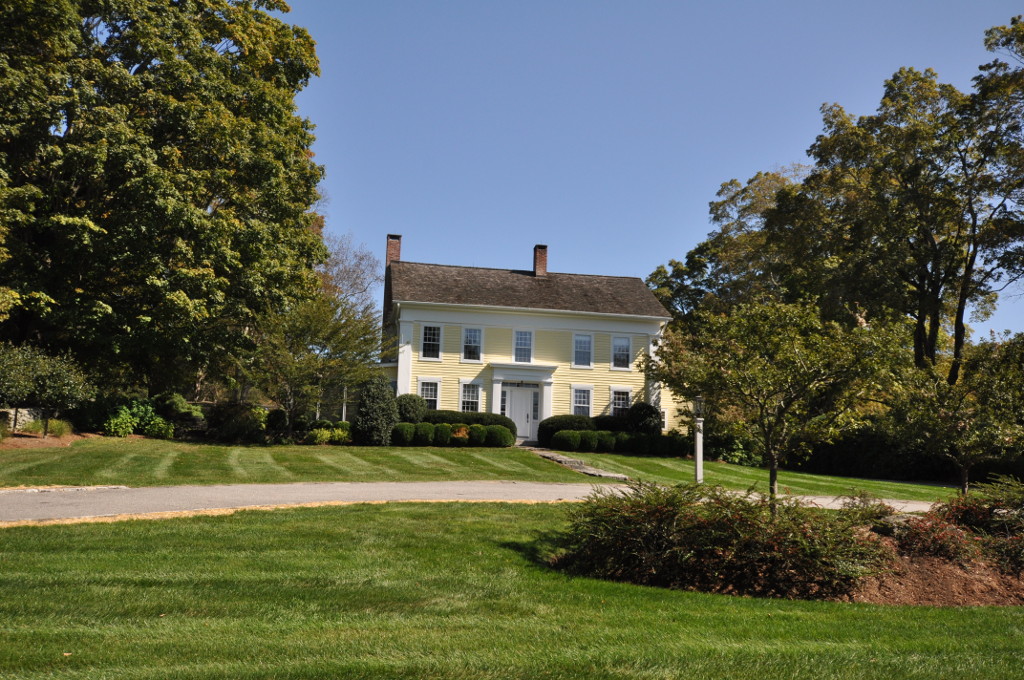
The John Dorr Nature Laboratory serves as the 320-acre rural satellite campus for the Horace Mann School, located in Washington, Connecticut. Established in 1965, this facility represents a distinct departure from the school's urban center in the Bronx, functioning not as a recreational retreat as a curricular requirement for students from second grade through high school. The laboratory sits on Nettleton Hollow Road, a thoroughfare with a history dating back to the pre-colonial and colonial eras of Litchfield County. The acquisition and subsequent expansion of this property allowed the administration to institutionalize outdoor education, placing physical risk and environmental science on equal footing with classroom instruction.
The origins of the Dorr Laboratory lie in a 1965 gift from Nell Dorr, a photographer, in memory of her husband, John Van Nostrand Dorr. John Dorr was a chemical engineer, metallurgist, and inventor known for the Dorr classifier and the Dorr thickener, devices that revolutionized mining and sewage treatment. The initial donation consisted of 83 acres. The school administration accepted the property with the specific intent of creating a "laboratory" for living, rather than a passive park. This designation aligned with the school's experimental roots at Teachers College, extending the pedagogical testing ground into the natural world. Over the subsequent decades, the school aggressively expanded the footprint of the facility, purchasing adjacent parcels to quadruple the size of the campus to its current 320-acre expanse. This expansion secured a buffer zone against development in the affluent Washington Depot area, preserving the ecosystem for student study.
The land itself possesses a history that predates the school's ownership by nearly three centuries. Nettleton Hollow was one of the earliest areas settled by European colonists in the region, with records indicating activity as early as the 1740s. The terrain, characterized by rolling hills, hardwood forests, and stream valleys, originally supported subsistence farming and small- industry. The nearby Rising Sun Tavern, established in 1748, served travelers on the north-south stagecoach routes connecting Cornwall and New Haven. By the time Horace Mann acquired the land in the mid-20th century, the agricultural utility of the rocky soil had long declined, allowing the forest to reclaim the fields. This succession provided a readymade biological classroom where students could observe the transition from agrarian use to secondary-growth forest.
Operational infrastructure at the Dorr Laboratory underwent a radical transformation in the 21st century. For decades, the facility relied on rustic cabins with limited amenities, reinforcing a philosophy of hardship and simplicity. In 2009, the school completed an $8 million capital project designed by Centerbrook Architects & Planners. This construction replaced aging structures with a new main lodge, a bunkhouse, a faculty residence, and a barn-style classroom. The project prioritized high-performance building metrics. The new facilities achieved LEED Gold certification, a rigorous standard for environmental sustainability. Engineering reports from the time indicate that the integration of photovoltaic solar panels and geothermal heating and cooling systems reduced energy consumption by 32 percent compared to standard code-compliant buildings. These systems eliminated the need for approximately 4, 121 gallons of fuel oil annually and prevented the emission of 42 tons of carbon dioxide each year.
The curriculum at Dorr operates on a tiered model of increasing intensity. Students begin visiting the facility in the second grade for day trips, progressing to overnight stays by the third grade. The program culminates in the "Searchers" initiative for eighth-grade students. Modeled after Outward Bound methodologies, Searchers requires students to engage in an eight-day wilderness immersion. This includes a three-day backpacking expedition where students must navigate the terrain, manage their supplies, and function as a unit without direct faculty intervention. The school launched the Searchers program in 1966, shortly after the land acquisition. Although the administration suspended the program in 1996, they revived it in 2006 under the direction of Glenn Sherratt, recognizing that the absence of such a rite of passage left a void in the middle school experience. The revival reinstated the physical and psychological demands of the course, viewing stress and fatigue as necessary components of character development.
Environmental science instruction at Dorr utilizes the specific hydrology and geology of the site. The campus contains streams that feed into the Shepaug River watershed. Students conduct water quality testing, catalog macroinvertebrates, and track forest health metrics. The 2009 facilities included a wet lab designed to process samples collected from the field, bridging the gap between raw nature and analytical science. The "Access to Nature" project also improved the physical accessibility of the site, ensuring that the rugged terrain did not preclude participation by students with limited mobility. This engineering effort involved grading route and modifying structures to meet modern accessibility standards while maintaining the wilderness aesthetic.
| Period | Event / Milestone | Operational Context |
|---|---|---|
| 1748 | Establishment of Rising Sun Tavern | Nettleton Hollow serves as a colonial transport hub. |
| 1965 | Gift from Nell Dorr | Horace Mann acquires initial 83 acres in Washington, CT. |
| 1966 | Launch of "Searchers" Program | Implementation of Outward Bound-style wilderness education. |
| 1996 | Suspension of Searchers | Program hiatus due to administrative shifts. |
| 2006 | Revival of Searchers | Reinstatement of the 8-day intensive curriculum. |
| 2009 | Capital Expansion ($8M) | Construction of LEED Gold Lodge, barn, and bunkhouses. |
| 2026 | Current Operations | 320-acre campus operating with net-zero energy. |
The financial logistics of maintaining a satellite campus 85 miles from the main school require a substantial allocation of the operating budget. The Dorr Laboratory maintains a permanent resident faculty and support staff who manage the physical plant and the safety year-round. Unlike a commercial camp that shuts down in the off-season, Dorr operates continuously, hosting different grade levels and faculty retreats throughout the academic year. The transportation of students involves a complex schedule of busing, with fleets moving between the Bronx and Washington Depot weekly. This logistical chain ensures that every student, regardless of their urban background, gains repeated exposure to the rural environment.
Safety management at Dorr involves strict, particularly for the backpacking segments of the curriculum. The school maintains communication lines with local emergency services in Washington and the surrounding Litchfield Hills area. The isolation of the site, while pedagogically valuable, presents inherent risks regarding medical emergencies and severe weather. The modern facilities constructed in 2009 included upgraded communications infrastructure and emergency power generation to mitigate these risks. The school treats the laboratory not as a field trip destination as a fully regulated campus extension, subject to the same liability and oversight standards as the buildings in New York City.
By 2026, the John Dorr Nature Laboratory has solidified its role as a counterweight to the high-pressure academic environment of the Bronx campus. The data on student outcomes suggests that the intervals of physical labor and nature immersion provide necessary psychological decompression. The facility also serves as a testbed for the school's broader sustainability goals. The performance data from the Dorr solar arrays and geothermal loops inform the energy decisions made for the urban campus renovations. The laboratory stands as a physical manifestation of the school's belief that competence requires more than intellectual agility; it demands the ability to navigate the physical world with confidence and endurance.
Academic Curriculum, Trimester System, and Departmental Requirements

The academic architecture of Horace Mann School (HMS) represents a deliberate evolution from the experimental pedagogy of the late 19th century to the high- preparatory environment of 2026. While the school was founded in 1887 as a clinical testing ground for Teachers College, Columbia University, its curriculum has shifted away from the progressive, child-centered theories of John Dewey, who lectured at Teachers College during the school's formative years, toward a rigorous, content-heavy model that rivals the intensity of tertiary institutions. This transition mirrors the broader trajectory of American elite education, moving from the 18th-century "Latin Grammar School" model, which prioritized rote memorization of classical texts, to a modern synthesis of serious inquiry, primary research, and technical fluency.
A defining feature of the school's structural organization is the bifurcation of its academic calendar. While the Nursery and Lower Divisions operate on a trimester system to accommodate the developmental need for frequent assessment and shorter learning pattern, the Middle and Upper Divisions function primarily on a semester basis. This semester structure in the Upper Division (grades 9-12) aligns with university schedules, facilitating the calculation of credits required for college admissions. Even with this semester-based credit system, the pacing of the academic year is frequently punctuated by "marking periods" that serve as checkpoints, maintaining a relentless rhythm of evaluation that students and alumni frequently describe as a "pressure cooker." The trimester model in the younger grades allows for a broader rotation of "specials" and electives, exposing students to art, music, and foreign languages early, a vestige of the school's original mission to develop the "whole child" before the specialization of the high school years takes over.
The most significant curricular shift in the school's recent history occurred in 2022, when the administration eliminated Advanced Placement (AP) courses. This decision, fully realized by the 2025-2026 academic year, marked a departure from the standardization imposed by the College Board. In place of APs, HMS introduced "400-level" and "Advanced" courses designed internally by faculty. This move allowed the school to reclaim curricular autonomy, freeing instructors from the need of teaching to a standardized test. For example, instead of a generic AP U. S. History curriculum, students engage in specialized seminars that might examine the "Atlantic World" or specific eras of American legal history with the depth of a college undergraduate seminar. This shift was driven by data suggesting that HMS students were already exceeding AP standards, rendering the external designation redundant and restrictive.
The Upper Division graduation requirements are extensive, ensuring that students cannot bypass core competencies in favor of early specialization. As of 2026, the "Program of Studies" mandates a four-year continuous enrollment in English, reinforcing the school's reputation for producing strong writers. The History Department requires three years of coursework, notably beginning with "Atlantic World History" in the ninth grade, a course that replaces the traditional "Western Civilization" model with a more interconnected view of Europe, Africa, and the Americas. This specific curricular choice reflects a historiographical shift away from Eurocentrism, aligning with modern university standards.
In the sciences, the requirement of two years (Biology plus Chemistry or Physics) is a deceptive minimum; internal data shows that the vast majority of students complete four years of science, frequently doubling up on electives like Molecular Genetics or Organic Chemistry in their senior year. The Mathematics trajectory is similarly aggressive, with a three-year requirement that culminates in Calculus or higher-level statistics for most of the student body. A distinct requirement is the half-credit in Computer Science and Robotics, ensuring that every graduate possesses functional literacy in algorithmic thinking, a need in the post-2020 educational economy.
Beyond the classroom, the curriculum integrates mandatory experiential learning through the John Dorr Nature Laboratory in Washington, Connecticut. Unlike optional outdoor retreats at other schools, the "Dorr" programs are curricular requirements. Students must participate in multi-day residential programs that blend environmental science, survival skills, and community bonding. This requirement dates back to the acquisition of the property in 1965 and serves as a counterweight to the urban intensity of the Bronx campus. Also, the Service Learning requirement mandates 80 hours of community engagement, with specific benchmarks set for the 10th and 12th grades, enforcing the institution's stated commitment to public purpose.
The following table outlines the Upper Division graduation requirements for the Class of 2026, illustrating the breadth of the mandatory curriculum:
| Department | Required Credits / Time | Specific Course Notes |
|---|---|---|
| English | 4 Years | Continuous enrollment required; no "testing out." |
| History | 3 Years | Must include Atlantic World History and U. S. History. |
| Mathematics | 3 Years | Progression through Algebra II & Trigonometry required. |
| Science | 2 Years | Biology is mandatory; Chemistry or Physics must follow. |
| World Languages | Level III Proficiency | Requires completion of the third level of a single language. |
| Arts | 1. 5, 2 Credits | Must include both Studio/Performance and Appreciation. |
| Physical Education | 4 Years | Can be satisfied by team sports or out-of-school contracts. |
| Computer Science | 0. 5 Credit | Introduction to Computer Science or Engineering. |
| Service Learning | 80 Hours | 40 hours by end of Grade 10; 40 hours in Grades 11-12. |
| Health & CPR | Required | Includes Health 1, Health 2, and CPR/AED certification. |
The rigor of these requirements creates an environment where "free periods" are a rarity. The daily schedule is a complex matrix of rotating blocks, a logistical puzzle that attempts to balance the heavy course load with the school's massive extracurricular program. Critics of this system point to the high levels of reported stress among the student body, a concern the administration has attempted to address through the "Health and Wellness" curriculum. Yet, the fundamental academic ethos remains unchanged: HMS operates on the belief that maximum exposure to advanced content is the only acceptable preparation for the Ivy League. The removal of APs did not lower the bar; it raised the ceiling, allowing faculty to teach material previously reserved for college sophomores, turning the Upper Division into a liberal arts college in miniature.
The library and research requirements further distinguish the HMS curriculum. The Katz Library is not a repository of books a center for instruction. Students are required to demonstrate proficiency in database research and information literacy, skills that are formally assessed in history and science research papers. This focus on primary research is a direct lineage from the school's origins as a laboratory school, where the process of inquiry was valued over the recitation of facts. In 2026, this to a student body that is expected to produce original scholarship before receiving a diploma.
Tuition Fees, Endowment Growth, and Financial Administration (1980, 2026)
| Academic Year | Tuition (Grades K-12) | Notes |
|---|---|---|
| 2010, 2011 | $35, 670 | Base tuition excluding fees |
| 2020, 2021 | $53, 200 | Surpassed $50k threshold |
| 2024, 2025 | $64, 070 | Enrollment reached 1, 805 students |
| 2025, 2026 | $65, 370 | Does not include ~$1, 500 in mandatory fees |
Executive compensation at Horace Mann has drawn scrutiny for its relative to peer institutions. Tax filings for the fiscal year ending June 2024 reveal that Head of School Thomas Kelly received a total compensation package of $2, 805, 522. This figure includes base salary, bonuses, and other reportable compensation. For context, this amount frequently exceeds the remuneration of presidents at major research universities and is significantly higher than the average compensation for heads of independent schools in the New York City area. The administration defends these figures by citing the complexity of managing a multi-campus institution with over 1, 800 students and 426 employees, yet the between executive pay and the median household income of the Bronx borough where the school resides remains a clear statistical reality. The school's asset base has grown substantially under this financial regime. IRS Form 990 filings show that Horace Mann's total assets reached $512, 054, 660 in 2024. This accumulation is fueled not only by tuition revenue also by high-yield fundraising campaigns. The "Annual Fund" and targeted capital campaigns rely heavily on the school's affluent parent body. In 2024 alone, the "Senior Parents Gift" campaign raised over $4. 7 million, demonstrating the school's ability to mobilize private capital for facility upgrades and endowment contributions. These funds allow the institution to operate with a degree of financial independence that insulates it from short-term economic downturns, even as it raises blocks to entry for non-wealthy families. Financial aid statistics provide a counter-narrative to the high "sticker price," though they also reveal the exclusivity of the student body. For the 2025, 2026 academic year, the school allocated over $16 million in financial aid. yet, this aid reaches only 17% of the student population. Consequently, 83% of families pay the full tuition and associated fees, a demographic reality that solidifies the school's position as an enclave for the ultra-wealthy. The average grant for those receiving aid is substantial, frequently covering the majority of tuition, which indicates a binary financial model: students are either full-pay families or recipients of significant assistance, with a "squeezed middle" largely absent from the enrollment roster. The administration's financial strategy also involves complex debt management and bond issuances to fund capital projects, such as the construction of new science and athletic facilities. Moody's and other credit rating agencies have historically viewed the school's financial health favorably, citing its strong demand and ability to raise tuition without dampening enrollment. The 2024, 2025 enrollment of 1, 805 students was the second-largest in the school's history, suggesting that even with the surging costs, the market demand for a Horace Mann education remains inelastic among New York's elite. Operational expenses are heavily weighted toward personnel, with approximately 85% of the operating budget dedicated to salaries and benefits. The school employs 265 faculty members, holding advanced degrees, and maintains a student-teacher ratio of approximately 8: 1. While this expenditure ensures small class sizes and specialized instruction, it also creates a structural need for continuous revenue growth. The "Facility Improvement Fee," introduced as a separate line item, exemplifies the method of passing capital maintenance costs directly to current families rather than drawing solely from the endowment, preserving the principal of the school's long-term investments. By 2026, Horace Mann School functions as a potent financial entity within the non-profit sector. Its ability to command tuition exceeding $65, 000, combined with an asset base of over half a billion dollars and executive compensation in the multi-million dollar range, reflects a broader trend in elite private education. The institution has successfully monetized its reputation for academic rigor, converting prestige into a self-perpetuating pattern of wealth accumulation and facility expansion, all while maintaining its tax-exempt status as an educational organization.
Admissions Data, Acceptance Rates, and Student Demographics
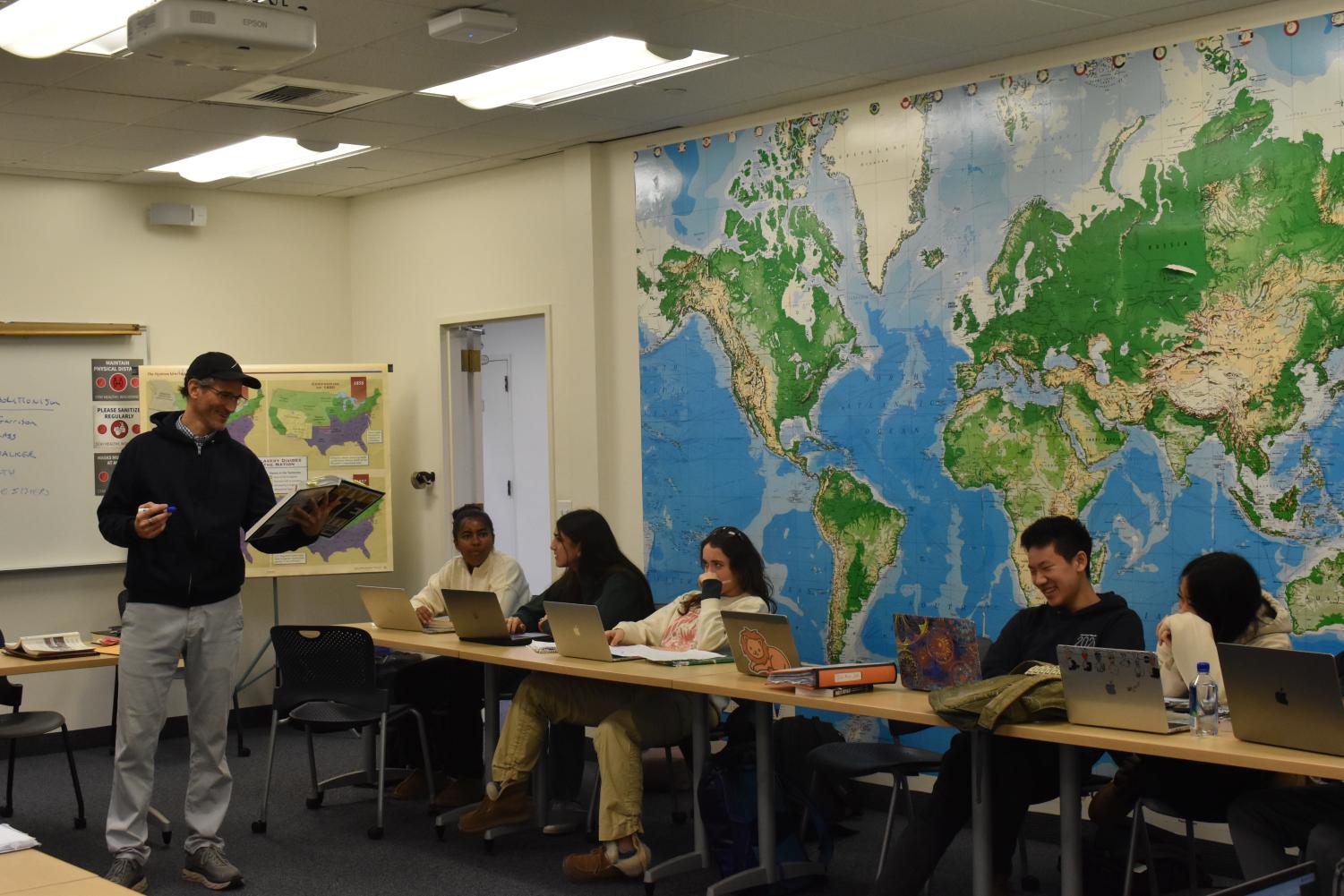
Horace Mann School operates as one of the most statistically exclusive educational institutions in the United States, maintaining an admissions funnel comparable to elite liberal arts colleges. For the 2024, 2026 reporting period, the school's acceptance rate hovered between 10% and 15%, a figure that drops significantly lower for non-entry grades. The primary intake points, Nursery (age 3), Kindergarten, Grade 6, and Grade 9, function as high- bottlenecks. Data from the 2024, 2025 academic year indicates the school processes approximately 2, 000 applications annually for roughly 100 to 120 Kindergarten spots, creating a yield pressure where qualified applicants vastly outnumber available seats. The Grade 6 and Grade 9 entry points offer even fewer openings, admitting around 50, 55 and 40, 45 new students respectively, frequently contingent on attrition.
The demographic composition of the student body has undergone a radical restructuring over the last century, reflecting broader shifts in American elite education. Founded in 1887 as a co-educational experimental unit of Teachers College, the institution fractured along gender lines in the mid-20th century. In 1947, the "Horace Mann School for Boys" separated to become an independent day school, while the girls' division remained under the Teachers College umbrella until its closure. The modern co-educational era began in earnest in 1975, following a sequence of strategic mergers: the 1968 absorption of the New York School for Nursery Years and the 1972 acquisition of the Barnard School. This consolidation allowed Horace Mann to re-engineer its population, moving from a boys-only preparatory culture back to a mixed-gender model that reports a near-even 50/50 split between male and female identifying students.
Current enrollment data for the 2024, 2026 window shows a student body of approximately 1, 805 pupils drawn from a wide geographic radius. Unlike Manhattan-centric independent schools, Horace Mann's location in the Riverdale section of the Bronx a commuter culture; families originate from over 155 distinct zip codes across New York, New Jersey, and Connecticut. This geographic diversity, yet, is filtered through an intense socioeconomic sieve. The tuition for the 2025, 2026 academic year is set at $65, 370 for grades K, 12, with the Nursery program costing approximately $46, 930. When accounting for mandatory fees, transportation, and incidental costs, the "sticker price" for a single year of attendance frequently exceeds $70, 000.
To mitigate this financial barrier, the school maintains a substantial financial aid budget, though it serves a minority of the population. In the 2025, 2026 fiscal year, approximately 17% of the student body received need-based assistance, with the institution allocating roughly $16 million to financial aid. This 17% figure reveals that over 80% of the student body pays full tuition, indicating a demographic heavily skewed toward the top percentile of household earners in the tri-state area. The school's financial stability is bolstered by an endowment that reported assets exceeding $512 million in 2024 tax filings, providing a capital cushion that rivals small universities.
| Metric | Data Point |
|---|---|
| Total Enrollment | ~1, 805 Students |
| Acceptance Rate | ~10, 15% (Estimated) |
| Tuition (K-12) | $65, 370 (2025, 2026) |
| Students of Color | ~55% |
| Financial Aid Recipients | ~17% |
| Average SAT Score | ~1450, 1460 |
| Average ACT Score | ~32, 33 |
| Geographic Reach | 155 Zip Codes (NY, NJ, CT) |
Racial and ethnic diversity statistics have become a focal point of the school's modern identity, particularly following the nationwide re-evaluation of independent school cultures in 2020. As of 2025, Horace Mann reports that approximately 55% of its students self-identify as students of color. This category includes significant populations of Asian American, African American, Hispanic/Latino, and Multiracial students, marking a sharp departure from the predominantly white demographics of the mid-20th century. yet, the intersection of this racial diversity with socioeconomic status remains a complex internal, as the high tuition costs mean that economic diversity lags behind racial diversity.
Academic metrics for admitted students reinforce the institution's reputation for hyper-selectivity. Standardized test scores for the upper grades are consistently in the top tier of national rankings, with average SAT scores ranging between 1450 and 1460 and ACT scores averaging 32, 33. These metrics suggest that the admissions process selects not just for chance, for already-demonstrated high academic performance, curating a student body that arrives performing at a collegiate level. The "feeder" nature of the school is bidirectional: it draws from the most competitive nursery and elementary programs in the city and feeds into the Ivy League and equivalent tier universities, creating a self-sustaining pattern of elite credentialism.
Sexual Misconduct Revelations, Amos Report, and Litigation (1962, 2025)
Campus Infrastructure, Fisher Hall, and Friedman Hall Expansions
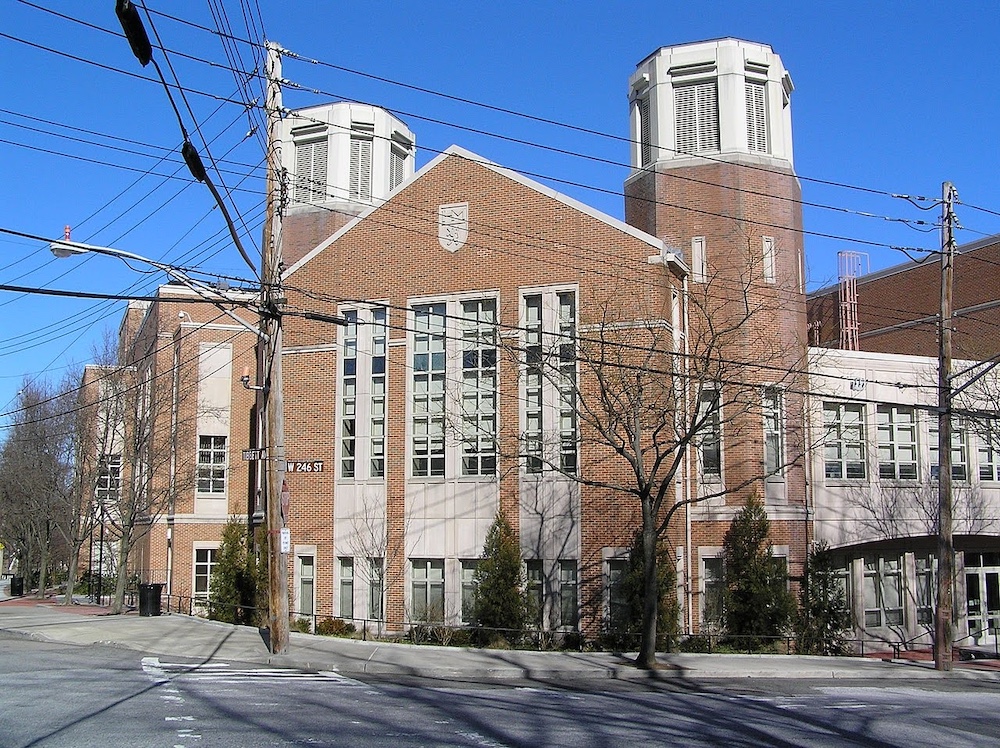
| Facility Name | Completion/Era | Primary Function | Key Infrastructure Note |
|---|---|---|---|
| Tillinghast Hall | 1914 | Main Academic Building | Original anchor of the Bronx campus move. |
| Prettyman Hall | 1924 (Reno. 2018) | Athletics / Fitness | Historic pool converted to fitness center; trusses preserved. |
| Fisher Hall | 1999 | Lower Division Arts/Dining | Integrated arts into the elementary daily flow. |
| Lutnick Hall | 2018-2019 | Science Center | Replaced tennis courts; features glass-walled labs. |
| Friedman Hall | 2020 | Student Center / Atrium | Connects historic gym with new science/aquatic wings. |
By 2026, the Horace Mann campus represents a physical plant valuation estimated in the hundreds of millions, maintained through an endowment that supports continuous capital improvement. The integration of Friedman Hall and Lutnick Hall has shifted the center of of the Upper Division, moving student life away from the cramped corridors of Tillinghast toward the light-filled, purpose-built spaces of the North Campus. This architectural evolution reflects the school's broader shift from a traditional preparatory model to a modern, resource-intensive educational complex that rivals small liberal arts colleges square footage and specialized facilities. The "village" concept, once a metaphor for the school's community, is a structural reality, with distinct "neighborhoods" for science, arts, and athletics connected by the central artery of Friedman Hall.
Athletics Program, Ivy Preparatory School League, and Facilities
Table: Select Ivy Preparatory School League Championships (1947, 2016)
| Sport | Championship Years |
|---|---|
| Boys Basketball | 1947, 1952, 1953, 1959, 1965, 1966, 1970, 1971, 1974, 1975, 1976, 1982, 1983, 1985, 1989, 2003, 2004 |
| Baseball | 1947, 1962, 1963, 1966, 1978, 1986, 1994, 1996, 2004 |
| Football | 1957, 1959, 1967 (Ivy); 2013, 2014 (Hudson Valley) |
| Girls Outdoor Track | 1983, 1984, 1985, 1986, 1987, 1988, 1989, 1998, 2006, 2007, 2009 |
| Boys Soccer | 1953, 1960, 1967, 1972, 1973, 1977, 1986, 1988, 1993, 2000, 2001, 2002, 2003, 2007, 2008, 2011, 2014 |
| Girls Soccer | 2015, 2016 |
Recent developments in the 2024-2026 academic years show a continued investment in coaching staff and specialized training. The school has expanded its use of data analytics in sports training, using the new facilities to track athlete performance metrics. The rivalry with Poly Prep has intensified in boys' baseball and soccer, with both schools frequently trading the top spot in the league standings. Even with the intense academic pressure of the Upper Division, the Lions field teams in over 30 sports, maintaining a participation rate that exceeds 80% of the student body. The integration of the John Dorr Nature Laboratory in Connecticut also supports the athletic mission, serving as a site for preseason training camps and team-building retreats that remove distractions and focus students on physical conditioning.
Student Publications, The Record, and The Mannikin

| Publication Name | Type | Frequency | Primary Focus |
|---|---|---|---|
| The Record | Newspaper | Weekly | Campus news, sports, opinion, administrative policy. |
| The Mannikin | Yearbook | Annual | Historical record, senior portraits, club documentation. |
| The Review | Magazine | Bi-monthly | Political analysis, global affairs, public policy. |
| Manuscript | Literary Journal | Semester | Poetry, short fiction, visual arts. |
| Spectrum | Journal | Semester | Scientific research, technology trends, articles. |
| The Verdict | Journal | Irregular | Legal theory, Supreme Court case analysis. |
| Prime | Magazine | Annual | Mathematics, logic puzzles, theoretical math history. |
| Folio 51 | Zine/Mag | Irregular | Gender, sexuality, feminist discourse. |
The volume of output from these publications confirms a central tenet of the Horace Mann ethos: the written word is a tool of influence. Whether through the weekly grind of *The Record* or the glossy spreads of *The Mannikin*, students are trained to document, analyze, and critique their environment, provided they remain within the boundaries set by the institution that credentials them. The legacy of Robert Caro, printing 10, 000 copies to provoke a superpower, remains the high-water mark of this ambition, a standard that current editors chase even as they navigate the tighter reputational controls of the 21st-century private school.
Notable Alumni in Politics, Literature, and Sciences
| Alumnus | Class | Domain | widespread Impact |
|---|---|---|---|
| Roy Cohn | 1946 | Law / Politics | Architect of McCarthyism; mentor to Donald Trump. |
| William Barr | 1967 | Government | Two-time U. S. Attorney General; Unitary Executive Theorist. |
| Robert Caro | 1953 | Literature / History | Biographer of Robert Moses; deconstructed political power. |
| Eliot Spitzer | 1977 | Politics | "Sheriff of Wall Street"; NY Governor; resigned in scandal. |
| Ellen Futter | 1967 | Science Admin | President of American Museum of Natural History (1993, 2023). |
| David Leonhardt | 1990 | Journalism | Pulitzer Prize winner; NYT economic columnist. |
While Cohn and Barr built structures of power, Robert Caro (Class of 1953) dedicated his life to them through forensic observation. Caro, arguably the most significant biographer of the 20th century, applied a rigor to his research that mirrors the school's intense academic demands. His masterwork, *The Power Broker*, exposed how unelected official Robert Moses reshaped New York City, the very city Horace Mann inhabits, without public consent. Caro's work stands as the intellectual counterweight to the Cohn-Barr axis, proving that the same education that produces power brokers also produces their most watchdogs. The literary output of Horace Mann alumni is characterized by a similar tension between establishment credentials and outsider rebellion. Jack Kerouac (Class of 1940) attended for a single postgraduate year, primarily to play football in hopes of a Columbia scholarship. Yet, even as a "ringer" on the gridiron, Kerouac wrote for the school newspaper, *The Record*. His time at the school was a collision between his working-class Lowell roots and the polished elitism of Riverdale, a friction that later fueled the Beat Generation's rejection of academic formalism. Kerouac's brief tenure contrasts with the route of Anthony Hecht (Class of 1940), a Pulitzer Prize-winning poet whose work embodied the high-modernist tradition, and James Salter (Class of 1942), whose are revered for their precise, crystalline sentences. In the sciences, the school's impact shifts from individual discovery to institutional command. Ellen Futter (Class of 1967) served as the President of the American Museum of Natural History for three decades, stepping down in 2023. Her leadership modernized one of the world's premier scientific institutions, overseeing the construction of the Rose Center for Earth and Space. Her contemporary, Margaret Galland Kivelson (Class of 1946), took a more direct route into the unknown. A space physicist at UCLA, Kivelson served as the principal investigator for the magnetometer on the Galileo orbiter. Her data provided the serious evidence suggesting a subsurface ocean on Jupiter's moon Europa. Kivelson's career, launching from the final class of the separate Horace Mann School for Girls, highlights the school's role in producing women who broke the mid-century glass ceiling in hard sciences. As of 2026, the legacy of these alumni remains a subject of active debate within the school's brick walls. The "Distinguished Achievement Award," once a routine rubber stamp of career success, has become a litmus test for the school's moral identity. The administration faces a student body that questions whether "notable" implies "honorable." Yet, the pipeline remains active. Recent graduates continue to filter into the Ivy League at rates that statistical probability, ensuring that the generation of Attorneys General, Pulitzer winners, and scientific directors likely carry the same diploma as Cohn, Caro, and Kivelson. The school remains a laboratory where the volatile elements of American ambition are mixed, heated, and occasionally, allowed to explode.
Board of Trustees Composition and Head of School Tenure
| Tenure | Head of School | Key Developments |
|---|---|---|
| 1894, 1920 | Virgil Prettyman | principal; oversaw the move to the Riverdale campus. |
| 1920, 1950 | Charles C. Tillinghast | Guided the school through the Great Depression and the 1947 separation from Columbia. |
| 1950, 1968 | Mitchell Gratwick | Established the John Dorr Nature Laboratory; emphasized character education. |
| 1968, 1991 | R. Inslee Clark Jr. | Oversaw the reintroduction of coeducation (1975); later implicated in the failure to stop sexual abuse. |
| 1991, 1995 | Phillip Foote | Transitional leadership following Clark's long regime. |
| 1995, 2005 | Dr. Eileen Mullady | female Head of School; oversaw major campus expansion and the construction of Rose Hall. |
| 2005, Present | Dr. Thomas M. Kelly | Longest-serving modern Head; consolidated financial stability; managed the 2012 abuse scandal emergency. |
The tenure of R. Inslee Clark Jr. (1968, 1991) remains the most polarized era in the school's history. While credited with modernizing the curriculum and integrating girls into the student body, Clark's administration was later identified as the period during which significant sexual abuse of students by faculty occurred. The 2012, brought to light by the *New York Times Magazine* and the alumni group Horace Mann Action Coalition (HMAC), forced the Board of Trustees into a emergency management posture. Under the chairmanship of Steven Friedman, the Board commissioned a report by the law firm Maroon & White. Critics, including survivors, argued that the Board prioritized protecting the school's brand and endowment over full transparency, citing the decision to negotiate settlements rather than extend the statute of limitations for lawsuits. Dr. Thomas M. Kelly, appointed in 2005, transformed the role of Head of School into that of a corporate CEO. His compensation package has drawn intense scrutiny for exceeding industry norms. Tax filings from 2020 through 2024 indicate Kelly's total annual compensation frequently surpassed $1. 5 million, with specific vesting years pushing the figure above $2. 8 million, making him one of the highest-paid primary/secondary school administrators in the United States. Kelly's supporters point to his fundraising efficacy and the physical expansion of the campus, including the new science and athletic facilities, as justification for the expenditure. His administration has also been characterized by a centralization of decision-making power and a rigorous focus on brand management. The Board's fiduciary strategies have resulted in an endowment that provides a financial cushion even with aggressive capital spending. yet, this financialization has led to tuition rates that consistently rank among the highest in New York City, exceeding $65, 000 annually by the mid-2020s. The Trustees maintain that these funds are necessary to support faculty salaries and the "need-blind" admission policy for qualified students, though the opacity of the school's full financial inner workings remains a point of contention for community members. As of 2026, the governance structure remains stable under Matthew Mark and Thomas Kelly. The Board continues to navigate the tension between its identity as an elite educational institution and its operational reality as a large- non-profit corporation. The legacy of the 2012 scandal influenced recent governance reforms, including stricter oversight committees and revised reporting for student safety, yet the concentration of authority within the Executive Committee of the Board remains a defining feature of the school's organizational hierarchy.