
Founding Charter and the 1781 Deed of Gift
The legal genesis of Phillips Exeter Academy is not a mere donation receipt a constitutional mandate known as the Deed of Gift, signed on May 17, 1781. John Phillips and his wife Elizabeth Phillips executed this document five months before the British surrender at Yorktown. The Deed established the school's governance structure, its financial bedrock, and its ideological trajectory. It stands as the singular authority for the institution, superseding even the Act of Incorporation passed by the New Hampshire General Assembly on April 3, 1781. The document did not transfer assets. It codified a specific worldview that linked intellectual power directly to moral obligation.
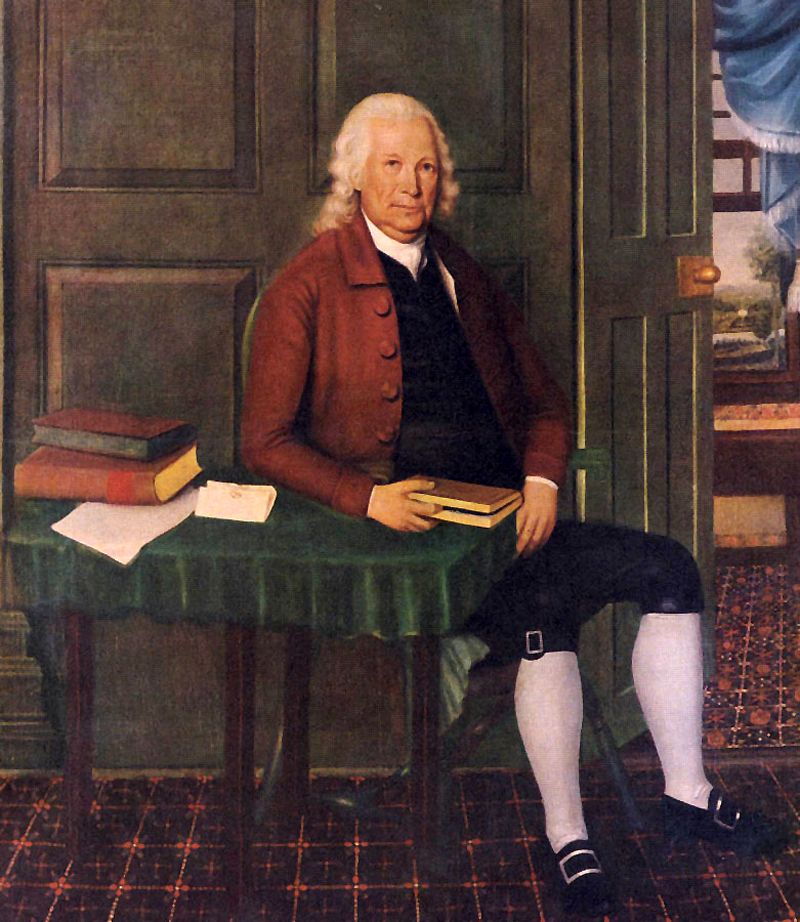
John Phillips was no simple schoolmaster. He was a merchant, banker, and land speculator who amassed significant capital through the mercantile economy of colonial New England. By 1781, he was the wealthiest citizen in Exeter. His fortune provided the initial endowment, which historical records value between £1, 733 and £2, 000 in the currency of the time, followed by subsequent bequests totaling approximately $60, 000 to $134, 000 by his death in 1795. This capital was not static. It was an active instrument intended to generate perpetual revenue. The Deed explicitly instructed the Trustees to "improve the property of the Academy" without diminishing the fund, a directive that has mutated into a modern financial engine of immense.
The origin of this capital requires rigorous scrutiny. Recent investigations by the Academy itself have confirmed that John Phillips was an enslaver. For much of his adult life, he held at least four people in bondage: Robin, Phillis, Dinah, and Corydon. While Phillips manumitted or sold these individuals prior to the signing of the Deed in 1781, the wealth injected into the Academy's foundation was inextricably linked to an economy powered by enslaved labor. The merchant activities that filled the Phillips coffers involved networks of trade connecting New England to the West Indies, where the plantation economy generated the sugar and rum profits that circulated back to New Hampshire banks. The foundation of the school rests on money derived from a system of exploitation that the Founder participated in until political and social began to turn in the late 1770s.
The Deed of Gift contains the Academy's most maxim: "Goodness without knowledge is weak and feeble; yet knowledge without goodness is dangerous." This clause reveals the Founder's Calvinist anxiety. Phillips feared that educating young men without instilling moral discipline would create skilled villains rather than virtuous leaders. The document mandates that the "Master" of the school must not only instruct students in science and language also regulate their "tempers and morals." This dual mandate of intellect and character remains the rhetorical shield the Academy uses to defend its admissions policies and disciplinary actions in 2026.
Another serious phrase in the Deed is the instruction to educate "youth from every quarter." In 1781, this likely referred to geographic diversity within the American colonies, specifically targeting students from New Hampshire and Massachusetts. Over two and a half centuries, the interpretation of this clause has expanded radically. In 2026, "every quarter" encompasses a global student body from over 44 states and 29 countries. Yet the original text carried an exclusionary undertone frequently overlooked. The Deed specified that the Trustees should be "members of the Church of Christ," cementing a Protestant hegemony that would for generations before secularization took hold.
The financial between the founding era and the present is absolute. The initial endowment, while substantial for the 18th century, is microscopic compared to the $1. 6 billion fund reported in June 2024. The school has evolved from a local charity school into a global financial powerhouse. The tuition model has also inverted. The original intent was to support "charity scholars" and those of "excelling genius" regardless of means. In the 2025-2026 academic year, the tuition for a boarding student stands at $69, 537. While financial aid is significant, the sticker price reflects a commodification of elite education that John Phillips could not have mathematically projected.
| Metric | 1781 Founding Context | 2025-2026 Status |
|---|---|---|
| Founding Document | Deed of Gift (May 17, 1781) | Governing Constitution |
| Primary Capital Source | Merchant banking, land speculation | Diversified global investment portfolio |
| Endowment Value | ~$60, 000, $134, 000 (Life Total) | $1. 6 Billion (2024) |
| Tuition Cost | Nominal / Charity-focused | $69, 537 (Boarding) |
| Labor Connection | Founder enslaved 4 individuals | Institutional reckoning & memorialization |
| Student Demographics | White males, regional (NE) | Co-ed, 44 states, 29 countries |
The governance structure established in 1781 remains largely intact. The Deed created a self-perpetuating Board of Trustees, limiting external democratic control. This autonomy allowed the Academy to survive the collapse of the Continental currency, the Civil War, and the Great Depression. It also insulated the leadership from immediate public accountability, a feature that would become controversial during modern crises regarding student safety and administrative transparency. The Trustees of 2026 wield power derived directly from the ink of 1781, managing an asset base that rivals small nations while adhering to a charter written before the ratification of the US Constitution.
John Phillips died in 1795, leaving the bulk of his estate to the Academy. His widow, Elizabeth, who co-signed the Deed, was left with a meager inheritance that she famously contested. This final act of the Founder, prioritizing the institution over his own family, cemented the Academy's identity. It is an entity designed to consume resources for the purpose of perpetuity. The Deed of Gift is not a relic. It is the active operating code for a school that balances its high-minded moral mission with the cold realities of high finance and elite reproduction.
Endowment Growth and Investment Strategy 1980-2026

| Year | Endowment Value (Approx.) | Key Financial Context |
|---|---|---|
| 2000 | $660 Million | Parity with Phillips Academy Andover. |
| 2007 | $1. 0 Billion | Surpassed $1B mark; aggressive alternative asset growth. |
| 2009 | ~$800 Million | Post-2008 emergency drawdown; liquidity constraints. |
| 2014 | $1. 2 Billion | Recovery complete; renewed focus on private equity. |
| 2019 | $1. 3 Billion | Steady growth; funding 52% of operating budget. |
| 2024 | $1. 6 Billion | Record high; 11. 2% return in FY24. |
The recovery post-2010 was driven by the same method that caused the volatility. By 2014, the fund had rebounded to $1. 2 billion. The administration, led by the Trustees and the Investment Committee, doubled down on the endowment's role as the primary revenue engine. By 2024, the endowment reached $1. 6 billion. This capital base allows the academy to subsidize the true cost of education significantly. As of the 2024-2025 fiscal year, the "draw" from the endowment covers approximately 52% of the school's operating expenses. This statistic is serious: it means the school relies more on its investment managers than on tuition payments from parents. This dependency creates a unique operational hazard. While the "need-blind" admission policy, fully implemented in 2021, and the pledge of free tuition for families earning under $125, 000 (as of 2024) are socially commendable, they are mathematically tethered to market performance. The endowment is not a rainy-day fund; it is the payroll, the heating bill, and the financial aid budget. A prolonged period of market stagnation, similar to the 1970s, would force immediate and painful cuts to the program, as the spending rate is capped ( around 4. 5% to 5%) to preserve intergenerational equity. The management of these funds is overseen by a sophisticated apparatus that resembles a Wall Street firm more than a school treasury. The Chief Investment Officer and the Investment Committee allocate assets across global markets, with significant weight given to private equity and venture capital. These asset classes offer the chance for outsized returns, such as the 11. 2% return in 2024 which outperformed the 9. 5% median for peer institutions, they also lock up capital for years. This illiquidity means that in a emergency, the school cannot easily access the bulk of its wealth without selling assets at a steep discount. By 2026, the between Exeter and the vast majority of American secondary schools has become absolute. With an endowment per student exceeding $1. 4 million, Exeter operates in a financial stratosphere comparable to elite liberal arts colleges like Williams or Amherst, rather than other high schools. This wealth allows for facilities that rival Division I universities, such as the Phelps Science Center and the world's largest secondary school library. Yet, it also imposes a heavy load of stewardship. The Deed of Gift requires these resources to be used for the "public benefit," a mandate that is increasingly scrutinized as the endowment grows larger while the cost of attendance continues to rise, hitting $69, 537 for boarding students in 2024. The tension between hoarding wealth for future stability and spending it to expand access remains the central conflict of the academy's modern financial history.
Harkness Table Pedagogy and Classroom Mechanics
| Era | Classroom Model | Avg. Class Size | Teacher Role |
|---|---|---|---|
| 1781, 1930 | Recitation (Rows) | 25, 35 | Lecturer / Disciplinarian |
| 1931, 1970 | Harkness (All Male) | 12 (Strict Cap) | Passive Moderator |
| 1970, 2000 | Harkness (Co-ed) | 12 | Active Facilitator |
| 2000, 2026 | Digital Harkness | 12 | Guide / DEI Monitor |
Critics of the method that it prioritizes verbal fluency over deep comprehension. A student can theoretically navigate a Harkness session by piggybacking on the ideas of others without original insight. Yet the Academy maintains that the method simulates the collaborative environments of high-level corporate and legal boards. The "Harkness Warrior" is a recognized archetype on campus, a student who weaponizes the discussion format to crush opposition. This aggressive dialectic is not a bug a feature of the system. It trains students to assert dominance in a group setting without the protection of a raised hand or a teacher's permission. By 2026, the Harkness method has resisted the intrusion of artificial intelligence more than traditional testing. Because the grade depends on real-time, face-to-face interaction, a student cannot use Large Language Models to generate responses during the session. The physical constraint of the table creates an analog firewall. While students may use AI for preparation, the performance at the oval remains a test of human rhetorical skill. The Academy has exported this model to hundreds of schools worldwide, yet the original tables in Exeter, New Hampshire, remain the primary site where this pedagogical experiment continues to run, unchanged in its dimensions for nearly a century.
Admissions Metrics and Demographic Composition
| Category | Percentage / Statistic |
|---|---|
| Total Enrollment | 1, 078 |
| Acceptance Rate | 18% |
| Yield Rate | 78. 5% |
| Students of Color | 57. 1% |
| White | 32. 5% |
| Asian | 22. 3% |
| International | 9. 9% |
| Boarding Tuition | $69, 537 |
| Students on Financial Aid | 45% |
Geographic diversity functions as a proxy for the school's global brand power. In September 2024, the student body represented 44 states and 32 countries. The "youth from every quarter" mandate has been reinterpreted to mean "youth from every global capital." The concentration of students from New York, California, and international hubs like Hong Kong and London is high. While the school recruits from rural America to maintain a semblance of national representation, the demographic weight has shifted to coastal urban centers and international wealth corridors. The feeder system has also evolved. In the mid-20th century, Exeter was the destination for students from junior boarding schools like Fay or Eaglebrook. Today, 52% of incoming students come from U. S. public schools. This statistic serves a dual purpose: it validates the school's meritocratic claims and widens the recruitment funnel beyond the traditional private school circuit. The admissions office relies heavily on the SSAT (Secondary School Admission Test), where successful applicants score in the 90th percentile or above. This standardized metric acts as the great equalizer and the great gatekeeper, filtering out thousands of applicants before a human reader ever reviews their essays. Retention and attrition rates reveal the internal pressure of the Academy. While admissions data focuses on who gets in, the "leavers" statistic, students who withdraw or are dismissed, is less publicized. The rigor of the Harkness table and the expectation of autonomy can overwhelm students accustomed to more structured environments. Historically, the school practiced "weeding out," a Darwinian method where the bottom of the class was systematically removed. Modern retention is higher, supported by extensive counseling and academic support systems, yet the transfer rate out of Exeter remains a quiet persistent data point in the school's annual reports.
Sexual Misconduct Allegations and Legal Settlements
The institutional veneer of Phillips Exeter Academy fractured in 2016, not from external attack, from the internal exposure of a decades-long culture of sexual misconduct and administrative concealment. Following a pattern seen in other elite New England boarding schools, the began with a single admission and cascaded into a widespread emergency. The catalyst was the disclosure regarding Rick Schubart, a revered history teacher and emeritus faculty member, who had admitted to sexual misconduct with students in the 1970s and 1980s. While the administration had quietly forced his retirement in 2011, they allowed him to retain his housing and emeritus status for years, shielding his reputation while leaving the community in the dark. This suppression of truth for the sake of institutional prestige defined the Academy's handling of abuse for nearly half a century.
In response to mounting pressure and investigative reporting by The Boston Globe, the Academy hired the law firm Holland & Knight to conduct an independent investigation. The resulting report, released in August 2018, was a devastating indictment of the school's failure to protect its charges. The investigation identified 11 former faculty and staff members who had engaged in sexual misconduct with students. The findings detailed a pattern where reports were ignored, minimized, or handled internally without notifying law enforcement. The "pass the trash" phenomenon, where abusive teachers are allowed to resign quietly and move to other schools with clean references, was clear in the historical handling of these cases.
The roster of accused faculty spanned multiple departments and decades, revealing that the abuse was not to a single bad actor was permitted by a absence of oversight. The following table summarizes key perpetrators identified during the investigations and the nature of the allegations against them:
| Name | Role | Tenure | Allegations & Outcomes |
|---|---|---|---|
| Rick Schubart | History Teacher | 1972, 2011 | Admitted to sexual misconduct with students in the 1970s and 80s. Forced to retire in 2011 kept emeritus status until 2015. |
| Steve Lewis | Art Teacher | 1990s, 2016 | Fired in 2016 after admitting to a sexual encounter with a student decades prior. |
| Arthur Peekel | Admissions Officer | 1970s | Charged with sexually assaulting a prospective student in 1973. Dismissed without police report at the time. |
| Lane Bateman | Drama Teacher | 1980, 1992 | Convicted of child pornography possession. Accused of videotaping students in private spaces. Deceased. |
| Henry Ploegstra | English Teacher | 1956, 1994 | Accused of inappropriate sexual contact with three students between 1966 and 1980. |
The administration's failure extended beyond faculty abuse to the mishandling of student-on-student sexual assault. A particularly egregious case surfaced in 2016 regarding a 2015 incident where a student reported being groped by another student in a church basement. Rather than referring the matter to law enforcement or conducting a formal disciplinary hearing, school officials, including the school minister, devised an "act of penance." The perpetrator was instructed to bake bread for the victim as a form of apology. This ad-hoc resolution, which forced the victim to interact with her assailant, exemplified the Academy's tendency to prioritize internal conflict resolution over professional standards of justice and victim safety. The mishandling of this case drew widespread condemnation and further eroded trust in the administration's competence.
The legal for Exeter has been extensive and complex, governed by the shifting sands of New Hampshire state law. In 2020, the New Hampshire legislature passed House Bill 705, which eliminated the civil statute of limitations for sexual assault, theoretically opening the door for older victims to sue. This legislative change appeared to be a watershed moment for survivors seeking accountability for abuse that occurred decades ago. Victims who had previously been time-barred from filing lawsuits began to organize, and the formation of Phillips Exeter Alumni for Truth and Healing (route) kept the pressure on the administration to acknowledge the full scope of the harm.
The legal shifted dramatically again in October 2025. In a landmark ruling, the New Hampshire Supreme Court declared that the 2020 law eliminating the statute of limitations could not be applied retroactively to cases where the old statute of limitations had already expired. This ruling immunized Phillips Exeter Academy from civil liability for the vast majority of the historical abuse cases identified in the Holland & Knight report. While the Academy has settled claims through confidential agreements and a dedicated healing fund, the 2025 ruling closed the courthouse doors to survivors who had waited decades for a chance at legal recourse. The decision underscored the clear difference between moral culpability and legal liability.
Even with the legal shield provided by the 2025 ruling, the reputational damage remains significant. The Academy has spent millions on legal fees, investigations, and settlements. The exact total of these financial outlays remains confidential, buried in non-disclosure agreements and insurance adjustments. The administration has since overhauled its reporting, establishing mandatory reporting to law enforcement and creating a Director of Student Well-Being position. These structural changes, while necessary, do not erase the history of a governance model that for generations valued the preservation of the Academy's image over the safety of its students.
Real Estate Holdings and Campus Infrastructure

The physical footprint of Phillips Exeter Academy is not a campus; it is a sovereign fiefdom within the town of Exeter, New Hampshire. As of 2026, the Academy controls approximately 675 acres of land and maintains a fleet of 147 buildings. This real estate portfolio transforms the institution into the dominant landlord of the region, possessing a property valuation that, if fully taxed, would fundamentally alter the municipal budget of the host town. The evolution of this holding from a single wooden schoolhouse in 1783 to a multi-billion-dollar asset class reflects a strategy of aggressive accumulation and architectural permanence.
The central nervous system of the campus is the Academy Building, currently in its fourth iteration. The building (1783) was a modest schoolhouse. The second (1794) and third (1870) succumbed to the institution's most persistent historical enemy: fire. The destruction of the third Academy Building in 1914 precipitated a rapid, capital-intensive reconstruction. The current structure, opened in 1915, was designed by Ralph Adams Cram in the Colonial Revival style. It stands as a of brick and marble, deliberately engineered to resist the flames that consumed its predecessors. In 2025, the Academy initiated a massive "renewal" of this facility to overhaul its aging HVAC systems and accessibility features, a project extending into 2026 that confirms the building's role as the administrative and symbolic core.
The trajectory of campus expansion shifted radically in the 1930s following the gift from Edward Harkness. The implementation of the Harkness Plan required not just furniture, a complete reconfiguration of the built environment. The Academy constructed new dormitories and classroom buildings specifically designed to house the seminar-style instruction mandated by the donor. This era cemented the "Georgian brick" aesthetic that defines the northern sector of the campus, creating a visual uniformity that projects stability and wealth. This construction boom was not aesthetic; it was a functional reordering of the school's operations to align physical space with pedagogical theory.
In 1971, the Academy broke from its architectural conservatism to commission the Class of 1945 Library, designed by Louis Kahn. This brutalist masterpiece is the largest secondary school library in the world, housing over 160, 000 volumes. The structure is a study in engineering complexity, featuring a load-bearing brick exterior shell and an inner concrete structure. While architecturally celebrated, the library presents a continuous maintenance challenge. The specific "Exeter brick" used in its construction and the absence of expansion joints have required expensive interventions to prevent degradation. It stands as a distinct asset on the balance sheet, requiring specialized preservation funds distinct from the general facilities budget.
The 21st century marked a strategic pivot toward the "South Campus," an area previously defined by athletic fields and service roads. The anchor of this expansion is the David E. and Stacey L. Goel Center for Theater and Dance, opened in 2018. Built on the site of former tennis courts, this 63, 000-square-foot facility bridged the physical divide between the academic north and the athletic south. It uses a closed-loop geothermal heating and cooling system, signaling a shift in infrastructure priority toward sustainability. This project, alongside the 2022 opening of "New Hall" (a dormitory incorporating a repurposed historic barn), demonstrates the Academy's method of densifying its existing footprint rather than sprawling outward.
Beneath the manicured lawns lies an industrial reality: a labyrinth of steam tunnels and utility conduits that power the institution. For decades, a central heating plant burned fossil fuels to push steam to the far reaches of the campus. Recent infrastructure projects have focused on converting these steam lines to hot water systems, which operate at lower temperatures and allow for the integration of geothermal sources. This invisible network is serious to the school's operation, requiring capital investment that rivals the cost of new surface construction.
The Academy's role as a residential landlord creates a complex with the town of Exeter. The institution owns dozens of single-family homes and multi-unit dwellings surrounding the core campus, a stock known colloquially as "faculty housing." This acquisition strategy creates a buffer zone around the school, insulating the campus from the private real estate market. By controlling these properties, the Academy dictates the neighborhood character and ensures housing availability for its 200+ faculty members. Yet, this removes significant acreage from the municipal tax rolls, a point of perennial friction. While the Academy is the largest taxpayer in Exeter due to its non-exempt holdings, the vast majority of its $2 billion asset base remains tax-exempt.
The following table outlines the major eras of physical capital formation:
| Era | Key Construction | Strategic Focus |
|---|---|---|
| 1783-1914 | Academy Buildings I, II, III | Establishment and survival against fire. |
| 1915-1929 | Academy Building IV, Thompson Gym | Monumentalism and permanence. |
| 1930-1940 | Harkness Classrooms, South Dorms | Pedagogical alignment (Harkness Plan). |
| 1960-1979 | Kahn Library, Fisher Theater | Modernist architectural experimentation. |
| 2000-2015 | Phelps Science Center, History Dept | modernization and LEED certification. |
| 2016-2026 | Goel Center, New Hall, Wetherell Reno | South Campus density and energy transition. |
As of 2026, the Academy is concluding the renovation of the Wetherell Dining Hall, a project designed to modernize food service for the southern dormitories. Simultaneously, the renewal of the Academy Building represents a reinvestment in the school's historic identity. These projects are funded by an endowment that allows for cash-heavy capital improvements, insulating the school from the financing costs that plague public institutions. The campus is not a collection of classrooms; it is a diversified real estate holding company operating under the banner of secondary education.
Alumni Influence in Global Technology and Finance
The trajectory of Phillips Exeter Academy alumni in the spheres of global finance and technology represents a shift from the stabilization of markets to their disruption. While the school's 18th-century charter emphasized moral obligation, the 20th and 21st centuries saw its graduates capture the commanding heights of capital allocation and algorithmic governance. This evolution traces a direct line from the partners of J. P. Morgan who managed sovereign debt crises to the architects of social media and artificial intelligence who manage human attention.
Thomas W. Lamont, Class of 1888, stands as the archetype of the Exeter financier. Rising to become the chairman of J. P. Morgan & Co., Lamont functioned as the "Acting Prime Minister of the World" during the interwar period. His influence extended far beyond simple banking; he negotiated the Treaty of Versailles reparations, attempted to stabilize the Italian economy under Mussolini, and advised three U. S. presidents. Lamont did not participate in the financial system; he engineered it. His tenure established a precedent where Exeter alumni viewed the global economy not as a force of nature, as a method to be calibrated. He directed massive philanthropy back to the Academy, funding the library that bears his name, thereby cementing the link between Wall Street profits and the school's physical expansion.
By the late 20th century, the locus of power shifted from the white-shoe investment banks of New York to the aggressive capital management firms of the West Coast. Tom Steyer, Class of 1975, exemplifies this transition. Before his pivot to environmental activism and presidential politics, Steyer founded Farallon Capital Management in 1986. Under his direction, Farallon pioneered absolute return strategies, growing into one of the largest hedge funds in the world. Steyer's career demonstrates the modern Exonian method to wealth: the accumulation of massive capital reserves through high-risk, high-reward arbitrage, followed by the deployment of that capital to influence public policy. The rigorous debate culture of the Harkness table, intended to democratic deliberation, proved equally in the ruthless environment of distressed asset investing.
The lineage of high-finance dominance continued with David Goel, Class of 1989. A protégé of Julian Robertson, Goel co-founded Matrix Capital Management. His firm became a significant player in the "Tiger Cub" ecosystem, managing billions in assets with a specific focus on technology and life sciences. Goel's trajectory highlights the tightening feedback loop between Exeter's endowment and its alumni. He served as a trustee of the Academy, overseeing the very financial structures that sustain the institution's billion-dollar endowment. This insular economy allows the school to operate as a sovereign wealth fund with an educational wing, where alumni generate returns that fuel the institution, which in turn produces the generation of capital allocators.
The turn of the millennium marked the most radical shift in alumni influence, moving from the management of money to the coding of reality. The Class of 2002 produced two figures who would fundamentally alter the internet: Mark Zuckerberg and Adam D'Angelo. Their collaboration began not in a Silicon Valley garage, in the dormitories of Exeter. It was here they built the Synapse Media Player, a music recommendation engine that used machine learning to predict user preferences. This project, completed while they were still high school students, laid the conceptual groundwork for the algorithmic feed that would later define Facebook. The environment at Exeter, which provided unfettered access to high-speed internet and a culture of intellectual autonomy, allowed them to bypass the traditional apprenticeship of the corporate world entirely.
Adam D'Angelo's influence extends well into the present era of artificial intelligence. As the CEO of Quora and a long-standing board member of OpenAI, D'Angelo occupies a serious node in the governance of AGI (Artificial General Intelligence). During the corporate turbulence at OpenAI in late 2023, D'Angelo remained the singular constant on the board, holding the power to shape the direction of the world's most prominent AI laboratory. By 2026, his role solidified Exeter's footprint in the debate over machine sentience and safety. Unlike Lamont, who managed the debts of nations, D'Angelo and his cohort manage the cognitive infrastructure of the species. Other alumni, such as Karl Cobbe (Class of 2009), a research scientist at OpenAI, reinforce this network, ensuring that Exonians remain at the frontier of large language model development.
The following table contrasts the of influence between the financial titans of the 20th century and the technological architects of the 21st, demonstrating the shift from asset management to protocol control.
| Alumnus | Class Year | Primary Vehicle | Domain of Influence | widespread Impact |
|---|---|---|---|---|
| Thomas W. Lamont | 1888 | J. P. Morgan & Co. | Sovereign Debt / Banking | Stabilized global currencies post-WWI; advised U. S. Presidents on economic policy. |
| Tom Steyer | 1975 | Farallon Capital | Hedge Funds / Distressed Assets | Pioneered absolute return investing; shifted capital into political activism. |
| David Goel | 1989 | Matrix Capital | Venture Capital / Equities | Bridged public markets and tech startups; key figure in the "Tiger Cub" lineage. |
| Mark Zuckerberg | 2002 | Meta (Facebook) | Social Media / VR | Centralized global communication; redefined privacy and digital identity for 3 billion users. |
| Adam D'Angelo | 2002 | OpenAI / Quora | Artificial Intelligence | Governing board member of the leading AI entity; controls key decisions on AGI safety and deployment. |
This concentration of power reveals a distinct characteristic of the Exeter education: the direct translation of academic privilege into widespread control. The skills required to dominate a Harkness discussion, rapid synthesis of information, rhetorical precision, and the confidence to challenge authority, are the exact competencies required to run a hedge fund or navigate a boardroom coup. The Academy does not teach students to participate in the economy; it trains them to architect it. Whether through the bond markets of the 1920s or the neural networks of 2026, the imprint of Phillips Exeter Academy remains visible on the levers of global power.
Exeter-Andover Rivalry and Athletic History

| Date | Sport | Winner | Score | Significance |
|---|---|---|---|---|
| May 22, 1878 | Baseball | Exeter | 11-1 | organized athletic contest between the two academies. |
| Nov 2, 1878 | Football | Andover | 22-0 | Inaugural football game; beginning of the oldest prep rivalry. |
| Nov 1893 | Football | Exeter | 26-10 | The "Pooch" Donovan game. Resulted in a 3-year ban on the series. |
| Nov 13, 1971 | Football | Exeter | 30-20 | "The Upset." Exeter rallies from 20-3 deficit to win. |
| Nov 9, 2024 | Football | Exeter | 42-21 | 143rd meeting. Exeter dominance continues with decisive spread. |
| Nov 8, 2025 | Football | Exeter | 48-16 | 144th meeting. Exeter extends winning streak to five games. |
The rivalry today is a polished product, streamed globally to alumni and marketed as the pinnacle of high school sports. Yet, beneath the veneer of sportsmanship and the handshake lines lies the same primal tribalism that fueled the brawls of the 1880s. It is a zero-sum game where the joy of one school is predicated entirely on the misery of the other. For the athletes, the "E/A" weekend is the defining moment of their tenure; for the institutions, it is a lucrative fundraising vehicle wrapped in the guise of tradition. The scoreboard changes, the animus remains the only constant.
Administrative Hierarchy and Trustee Governance
| Role | Incumbent (Feb 2026) | Function |
|---|---|---|
| President of Trustees | Kristyn McLeod Van Ostern '96 | Head of the Board; oversees Principal. |
| Principal | William K. Rawson '71 | Chief Executive Officer (Retiring June 2026). |
| Principal-Designate | Jennifer Karlan Elliott | Incoming CEO (Starts July 2026). |
| Chief Financial Officer | Marijka Beauchesne | Manages $175M+ annual budget. |
| Dir. Institutional Advancement | Morgan Dudley | Leads fundraising and alumni relations. |
The governance model faces scrutiny regarding transparency. While the Trustees publish broad financial data, the specific deliberations regarding disciplinary expulsions, settlement payouts, and investment strategies remain sealed. The "General Alumni Association" selects a small number of Trustees, the Governance Committee controls the majority of nominations, ensuring the Board remains a self-selecting entity. This closed-loop system preserves the institution's culture limits the ability of alumni or faculty to force structural change without Board consent.
Library Facilities and Louis Kahn Architecture

The intellectual nervous system of Phillips Exeter Academy centers on a single, massive brick cube: the Class of 1945 Library. While the Academy's history spans centuries, its library facilities spent nearly two hundred years in a state of inadequacy before the administration authorized one of the most significant architectural commissions of the twentieth century. The resulting structure, designed by Louis I. Kahn, is not a repository for books. It is a deliberate pedagogical machine, engineered to enforce a specific relationship between the student, the book, and the light.
For the century of its existence, the Academy possessed no centralized library. Books were scattered across small rooms, frequently locked away in the Academy Building, accessible only under strict supervision. In 1833, the collection was a single room of sermons and history books that students rarely touched. By 1905, this had expanded to only two rooms and 2, 000 volumes. The attempt at a dedicated facility appeared in 1912 with the construction of the Davis Library, designed by Ralph Adams Cram. A Neo-Georgian structure, Davis functioned as a "gentleman's library" rather than a research center. Its stacks were closed to students, who had to request books from a librarian stationed like a sentinel at the entrance. This restrictive model mirrored the rote memorization methods of the nineteenth century clashed violently with the Harkness Plan introduced in the 1930s, which demanded independent inquiry and direct access to information.
By the 1950s, the Davis Library was obsolete. Its 5, 000-volume capacity was overwhelmed by a collection growing toward 60, 000. Librarian Rodney Armstrong spent years lobbying for a new facility, initially hiring the firm O'Connor & Kilham to design a traditional replacement. The project proceeded through the design phase until the arrival of Richard Ward Day as Principal in 1964. Day, a former Marine with little patience for mediocrity, reviewed the traditional blueprints and fired the architects immediately. He declared his intention to hire "the very best contemporary architect in the world" to build a structure that would stand as a temple to learning. The search committee considered giants like I. M. Pei, Philip Johnson, and Paul Rudolph, a decisive intervention came from Jonas Salk. Salk, whose son attended Exeter, urged Armstrong to visit his own institute in California, designed by Louis Kahn. Armstrong was convinced. The commission was awarded to Kahn in November 1965.
Kahn's vision for Exeter was uncompromising. He rejected the notion of a library as a warehouse. He conceived of the building as a "doughnut" structure: three concentric rings of varying materials and functions. The outer ring, built of load-bearing brick, would house the readers in private carrels near the light. The middle ring, constructed of reinforced concrete, would hold the heavy book stacks, protected from direct sun. The inner ring would be a dramatic, empty atrium, a "sanctuary of the book" where the volume of the space itself inspired reverence. The design required a budget that quickly exceeded the initial $2. 5 million allocation. When costs threatened the elimination of the top floor, the building committee, rather than compromising the design, raised additional funds to ensure the cube remained a perfect nine-story volume.
The construction process, spanning 1969 to 1971, involved a monopolistic acquisition of materials that show the Academy's financial reach. Kahn insisted on a specific type of brick, water-struck, rough-textured, and variable in color, manufactured by the Eno Brick Company in Exeter. When the Eno family business collapsed in the mid-1960s, the Academy purchased the company's entire remaining inventory of approximately two million bricks. This strategic buyout ensured that the library, and the subsequent dining hall, would possess a uniform aesthetic that no other institution could replicate. The library exterior alone consumed 420, 000 of these bricks. Unlike modern buildings where brick is a thin veneer over a steel frame, Kahn's design used the brick as a structural element. The piers at the base of the building are massive, narrowing as they rise, visually and physically demonstrating the transfer of weight.
The library opened on November 16, 1971. It stands on a footprint of 111 by 111 feet and rises 80 feet into the air. The interior experience is defined by the central atrium, a 52-foot-high void pierced by circular openings in the concrete walls. These circles allow a visitor on the ground floor to look up and see the rows of books on the upper levels, fulfilling Kahn's mandate that the building should immediately announce its purpose. The transition from the ground floor to the floor (the main floor) involves a grand travertine staircase, signaling a movement from the mundane world to the intellectual sphere. There are no turnstiles or security checkpoints at the entrance, a design choice that enforces a culture of trust.
The study carrels, numbering 210, are positioned along the exterior walls. Each carrel is a private wooden niche, constructed of teak, with a window equipped with a sliding shutter. This arrangement grants the student control over their environment, allowing them to regulate the light. The hierarchy of materials is strict: brick for the exterior protection, concrete for the structural core, and wood for the areas of human contact. The teak, originally warm and honey-colored, has aged alongside the concrete, which Kahn deliberately left unfinished to show the marks of the forms, celebrating the construction process.
The facility's capacity is immense. While originally designed for 250, 000 volumes, the library currently houses approximately 160, 000 printed works, making it the largest secondary school library in the world. Its holdings rival those of small liberal arts colleges. The collection includes rare books and manuscripts that date back centuries, yet the building was also designed with future-proofing in mind. Kahn and Armstrong anticipated the digital age, including conduit space for cabling that allowed the library to be the building on campus to be fully computerized.
Maintenance of such a complex structure has required significant investment. The flat roof and intricate masonry details, typical of Kahn's work, present challenges in the New England climate. A detailed renovation plan, executed by Annum Architects between 2015 and 2021, addressed these matters. The project involved replacing the entire HVAC system, which had reached the end of its life, and upgrading the building's envelope to prevent water intrusion. The renovation also repurposed the ground floor, originally a service area, into a student commons, acknowledging the shift in library usage from purely solitary study to collaborative work. Even with these changes, the upper floors remain a of silence, preserving Kahn's original intent.
The Class of 1945 Library received the Twenty-five Year Award from the American Institute of Architects in 1997, a recognition reserved for buildings that have proved their worth over time. It remains the physical and symbolic center of the Academy. In a school that prides itself on the Harkness method, where the teacher is a facilitator rather than a lecturer, the library serves as the authority. It provides the raw material for the debates that occur around the oval tables, standing as a testament to the belief that access to knowledge, housed in a structure of permanence and beauty, is the highest privilege of the Exeter student.
| Era | Facility Name | Architect | Capacity/Holdings | Key Characteristic |
|---|---|---|---|---|
| 1833, 1912 | Academy Building Rooms | Various | 2, 000 volumes | Scattered, locked, inaccessible. |
| 1912, 1971 | Davis Library | Ralph Adams Cram | 5, 000 volumes (designed) | Neo-Georgian, closed stacks, "Gentleman's Library." |
| 1971, Present | Class of 1945 Library | Louis I. Kahn | 250, 000 volumes (capacity) | Modernist cube, open stacks, study carrels. |
Tuition Trends and Financial Aid Distribution
The financial history of Phillips Exeter Academy reveals a clear evolution from a tuition-free charitable school to one of the most expensive secondary institutions in the United States, followed by a modern pivot toward aggressive subsidization for lower- and middle-income families. This trajectory mirrors the broader economic shifts in American private education, where sticker prices have outpaced inflation for decades while endowments have been weaponized to offset costs for a select portion of the student body.
At its founding in 1781, Exeter was established with a charitable mandate. The Deed of Gift signed by John and Elizabeth Phillips emphasized the promotion of "piety and virtue" and the instruction of youth in the "great end and real business of living." For the few years, the Academy charged no tuition. It was not until 1809 that the Trustees levied the fee: a nominal sum of $2 per year. This token amount remained relatively stable for decades, reflecting an era where the school's operation relied heavily on the original Phillips endowment rather than tuition revenue. By the 1860s, tuition had risen to approximately $10 per term, or roughly $30 annually. Even as late as the 1890s, the cost remained modest; Principal Harlan Page Amen, who served from 1895 to 1913, doubled the tuition from $75 to $150 to fund facility improvements and professionalize the faculty.
The 20th century introduced a new economic reality. By the 1920s, tuition had reached $250. The post-World War II era saw costs accelerate, driven by the expansion of campus facilities, the introduction of the Harkness teaching method (which required more faculty for smaller class sizes), and general economic inflation. By 1964, boarding tuition broke the $2, 000 barrier. yet, the most dramatic acceleration occurred during the "Great Inflation" of the late 1970s and early 1980s. Between 1980 and 1986, boarding tuition jumped from approximately $6, 300 to over $10, 500, an increase of nearly 67 percent in just six years. This period marked the beginning of a trend where tuition increases consistently outstripped the Consumer Price Index, a phenomenon common across elite private colleges and boarding schools.
By the 2014-2015 academic year, the detailed fee for boarding students had reached $46, 905. A decade later, for the 2024-2025 term, the sticker price stood at $69, 537 for boarding students and $54, 312 for day students. This figure places Exeter among the most expensive secondary schools in the world, with a total cost of attendance (including books, travel, and incidentals) easily surpassing $75, 000 per year for full-pay families. The revenue from these fees, yet, covers only a portion of the actual cost per student; the remainder is subsidized by the school's endowment, which was valued at approximately $1. 6 billion in 2024.
To mitigate the impact of these astronomical costs and maintain a diverse student body, Exeter has implemented a "high-tuition, high-aid" financial model. The Academy admits students on a need-blind basis, meaning an applicant's financial situation does not influence admission decisions. Once admitted, the school commits to meeting 100 percent of the family's demonstrated financial need., this policy has been codified into specific income thresholds. Since 2008, families earning $75, 000 paid zero tuition. In a significant expansion of this policy announced for the 2025-2026 academic year, Exeter raised this threshold to $125, 000. Consequently, any admitted student whose family earns less than $125, 000 attends the Academy for free, with the school covering tuition, room, board, and frequently additional expenses like laptops and travel.
Data from 2024 indicates that approximately 45 to 48 percent of the student body receives form of financial aid. The average grant for a boarding student receiving aid is over $56, 000, meaning that nearly half the school pays a fraction of the sticker price. This redistribution is funded by an annual endowment draw of approximately 5 percent, which generates tens of millions of dollars specifically earmarked for scholarships. In 2019, for instance, 34 percent of the total endowment revenue was allocated directly to financial aid. This structure creates a bifurcated financial reality: wealthy families pay a premium that rivals university tuition, while low- and middle-income families access the same resources for little to no cost.
The table summarizes the historical progression of boarding tuition rates at Phillips Exeter Academy, illustrating the shift from a charitable institution to a high-cost luxury good with a built-in subsidy engine.
| Year | Boarding Tuition (Approximate) | Notes |
|---|---|---|
| 1781-1808 | $0 | Tuition-free under original charitable mandate. |
| 1809 | $2 | tuition fee introduced. |
| 1860s | $30 | Charged as ~$10 per term. |
| 1895 | $75 | Before Principal Amen's increase. |
| 1899 | $150 | Doubled to fund improvements. |
| 1920s | $250 | Post-WWI era. |
| 1964 | $2, 000 | Day tuition was ~$900. |
| 1980 | $6, 300 | Start of rapid inflationary increases. |
| 1986 | $10, 500 | Tuition hikes outpace inflation. |
| 2014 | $46, 905 | Modern high-tuition era. |
| 2024-2025 | $69, 537 | Current sticker price. |
| 2025-2026 | $0 (for <$125k income) | New "Free Tuition" threshold implemented. |
Operational Changes and Strategic Plans 2020-2026
Table 12. 1: Phillips Exeter Academy Financial & Admissions Metrics (2020, 2026)
| Fiscal Year | Boarding Tuition | Endowment Value | Admissions Policy | Zero-Tuition Income Cap |
|---|---|---|---|---|
| 2020-2021 | $57, 200 | $1. 3 Billion | Need-Aware | $75, 000 |
| 2021-2022 | $58, 714 | $1. 5 Billion | Need-Blind (Launched) | $75, 000 |
| 2023-2024 | $64, 789 | $1. 55 Billion | Need-Blind | $75, 000 |
| 2024-2025 | $66, 988 | $1. 6 Billion | Need-Blind | $125, 000 |
| 2025-2026 | $69, 537 | $1. 65 Billion (Est) | Need-Blind | $125, 000 |
Physical infrastructure projects in the 2020s focused on renovation rather than expansion, prioritizing energy efficiency and historical preservation. In 2025, the Academy launched a detailed renewal of the Academy Building, the school's central academic facility originally built in 1914. The project, scheduled for completion in August 2027, required the temporary relocation of the Assembly Hall program to the Love Gymnasium. This renovation was not cosmetic; it involved a total systems overhaul to meet new sustainability, reflecting a strategic shift toward carbon neutrality. Simultaneously, the school completed upgrades to the Wetherell Dining Hall and student residences, modernizing HVAC systems to improve air quality, a direct lesson from the pandemic years. The demographic composition of the student body shifted rapidly under the new admissions. By the 2024-2025 academic year, 57. 1% of students identified as people of color, a statistic that validated the efficacy of the need-blind model in altering the school's population. yet, this shift presented new operational challenges. The administration expanded the "Office of Multicultural Affairs" and increased staffing for counseling services to support a student body with more varied socioeconomic backgrounds. The "Equitable Exeter Experience" (E3) pre-orientation program became a standard method for integrating incoming students into the school's intense academic culture. As of early 2026, Phillips Exeter Academy operates as a hybrid entity: a colonial-era institution managed with the capital sophistication of a mid-sized corporation and the social agenda of a progressive think tank. The tuition for the 2025-2026 academic year stands at $69, 537 for boarding students, a figure that exceeds the median US household income. Yet, the aggressive use of the endowment to subsidize lower-income students has created a bifurcated financial model: the wealthy pay a premium that continues to rise, while the "youth from every quarter" envisioned by John Phillips attend largely on the school's dime. The Deed of Gift remains the governing document, its interpretation has been thoroughly modernized to prioritize equity alongside intellectual rigor.